

I used two cameras to record the eclipse from a terrace with spectacular views to the west: an Insta360 X3 centred on the people, the landscape and the Sun in the sky (the environmental view), and a DWARF-Mini smart telescope aimed at the Sun (the solar view). Out of all the footage, I have selected the most relevant moments here.
The first minute is a time-lapse of the partial phase, roughly three-quarters of an hour before totality compressed into 60 seconds. From about 1:03 the telescope footage plays in real time, and the wide view is a time-lapse stretched to match, so the two stay in sync to within a few seconds. Times are positions in the video. Totality began shortly after 20:30 Spanish time (CEST) and lasted about 1 min 35 s.
Click any frame to enlarge it.
Timeline
Partial eclipse under way
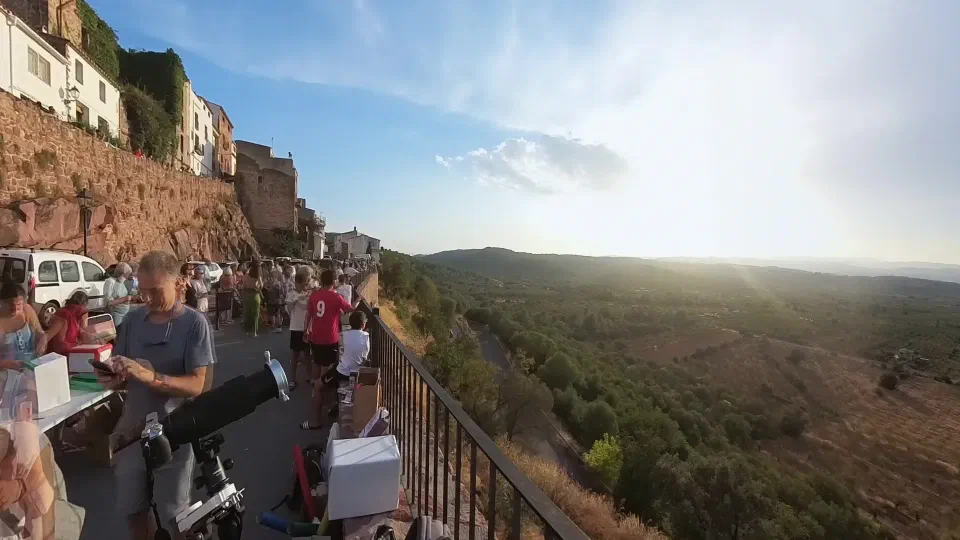
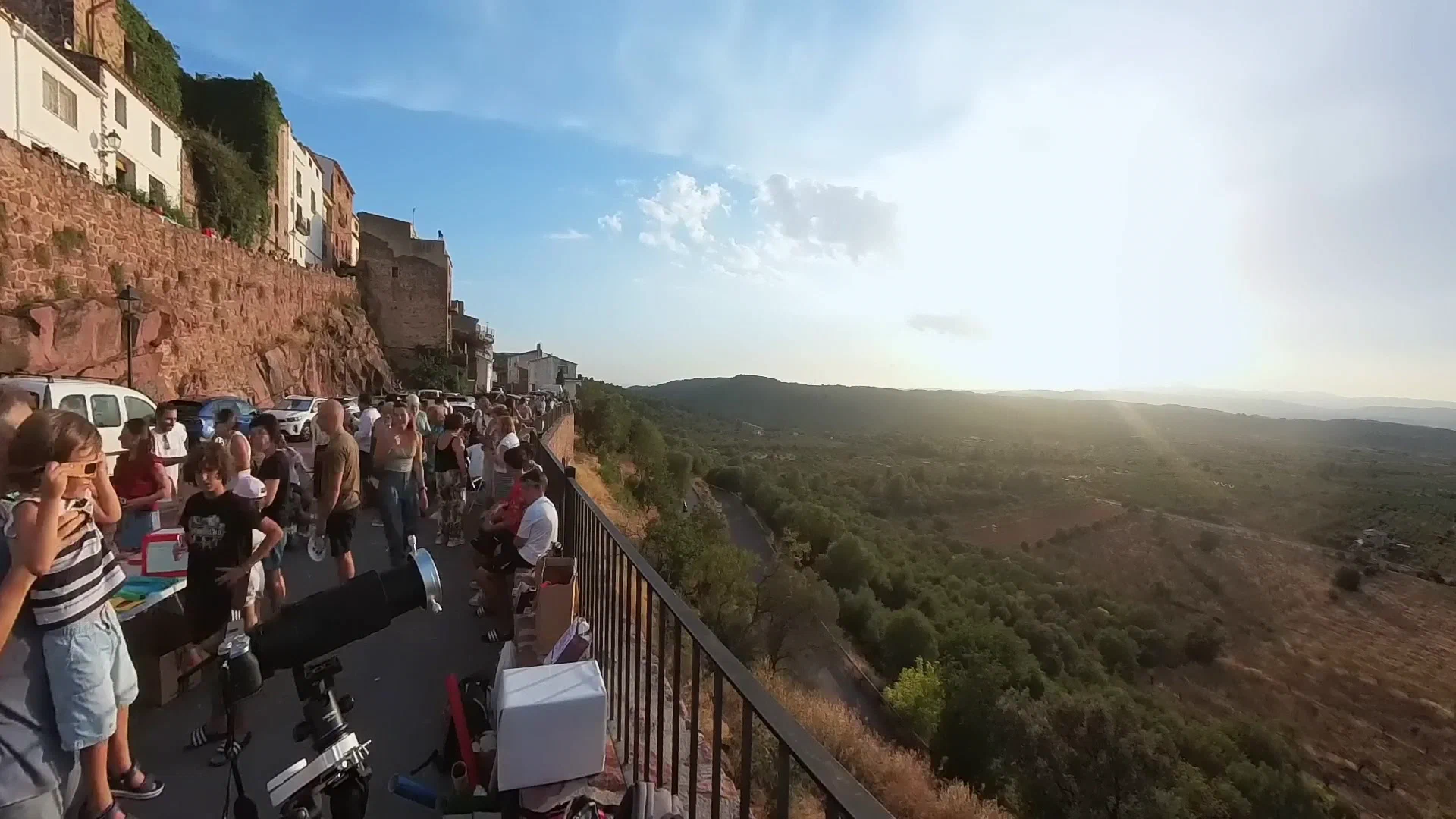
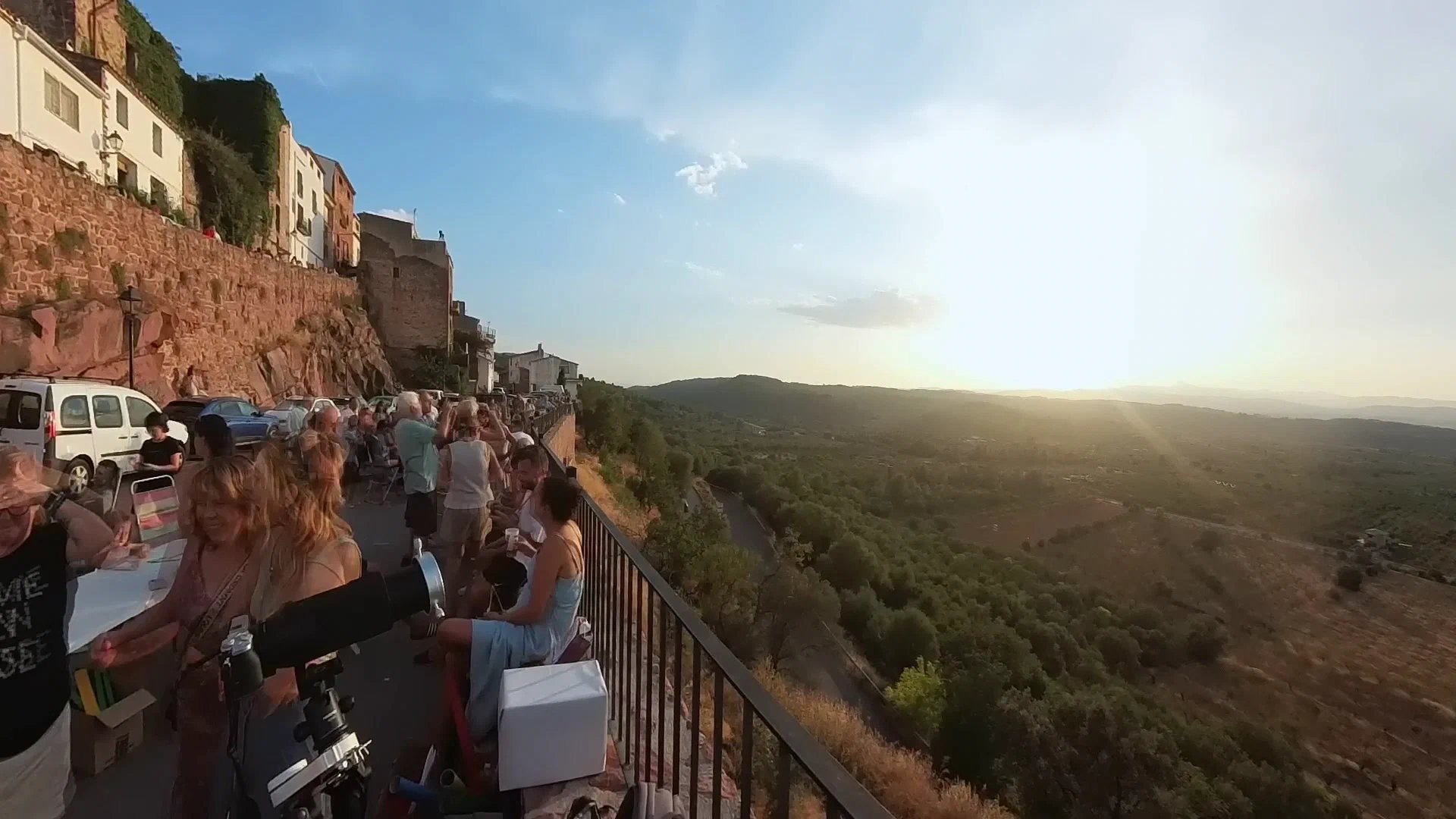
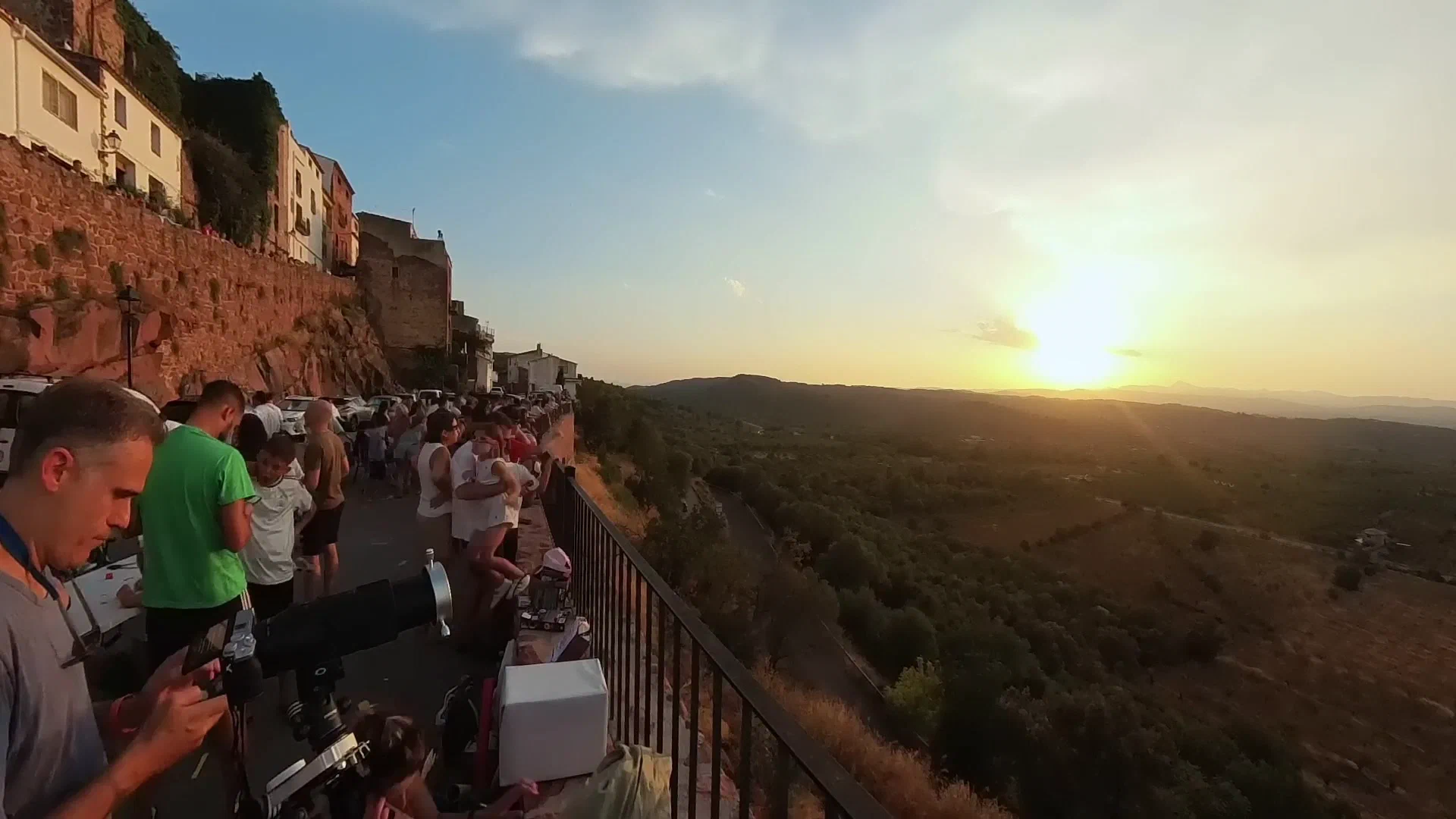
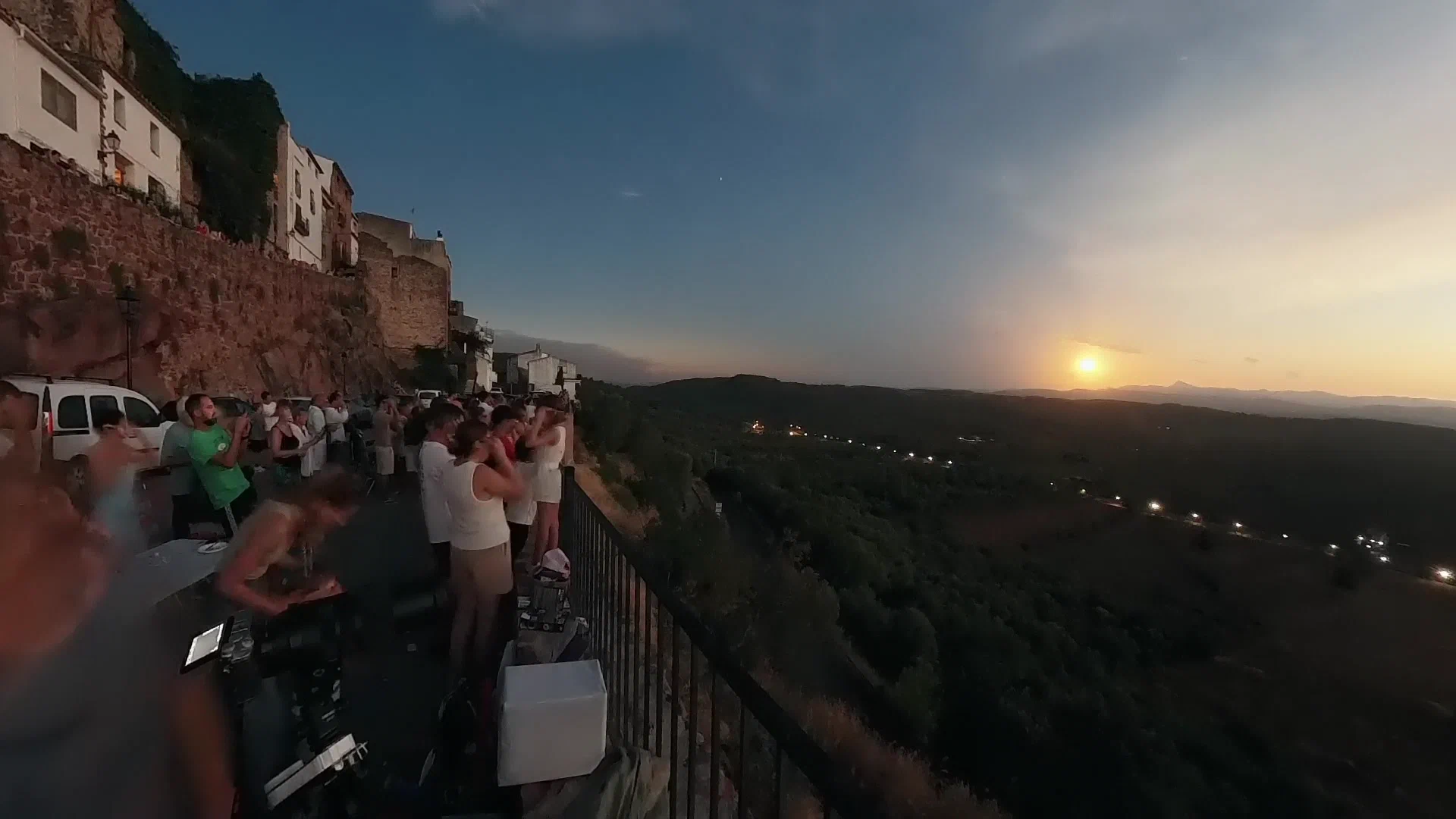
Environmental viewA hilltop terrace full of families and amateur astronomers. In the foreground, a small refractor wears a solar filter (the silver ring). Daylight still looks normal: while much of the Sun is uncovered, our eyes and the camera's auto-exposure compensate, so a partial eclipse is hard to notice without eclipse glasses. 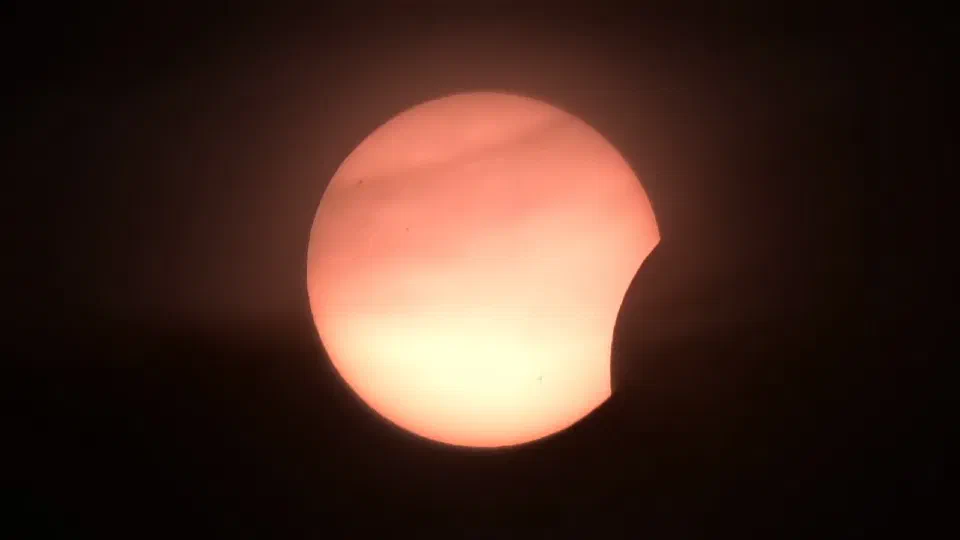
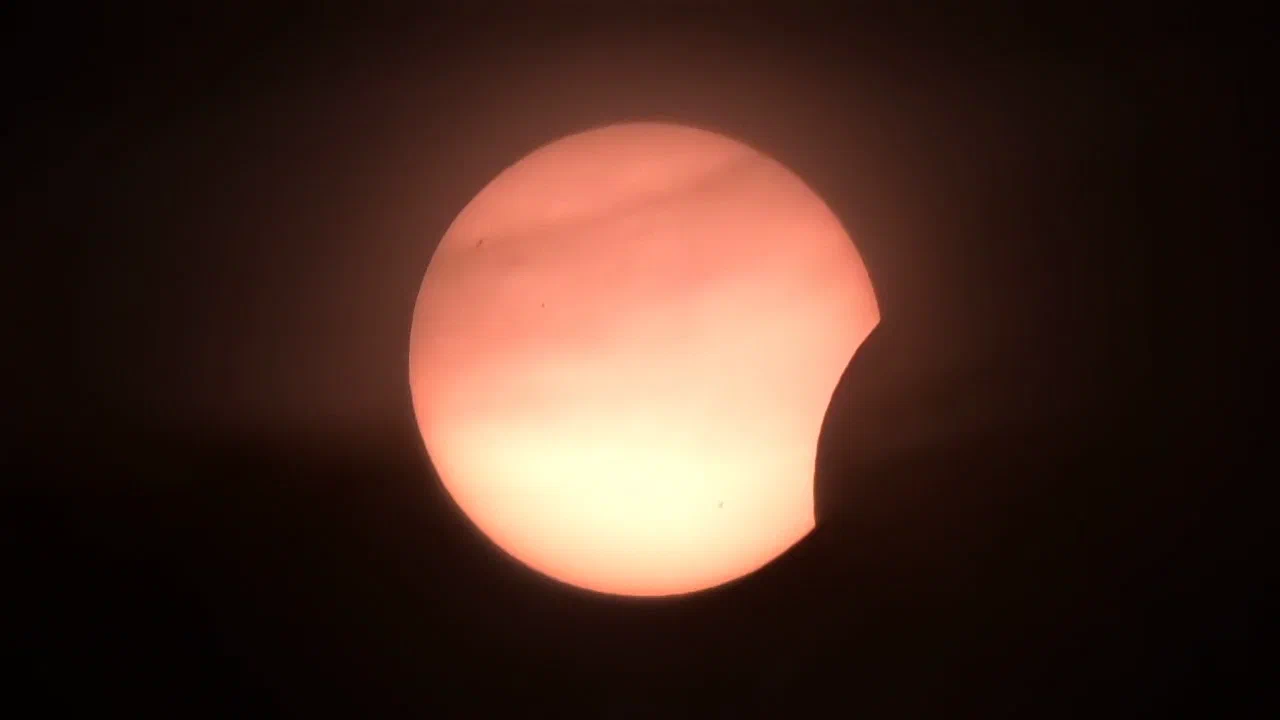
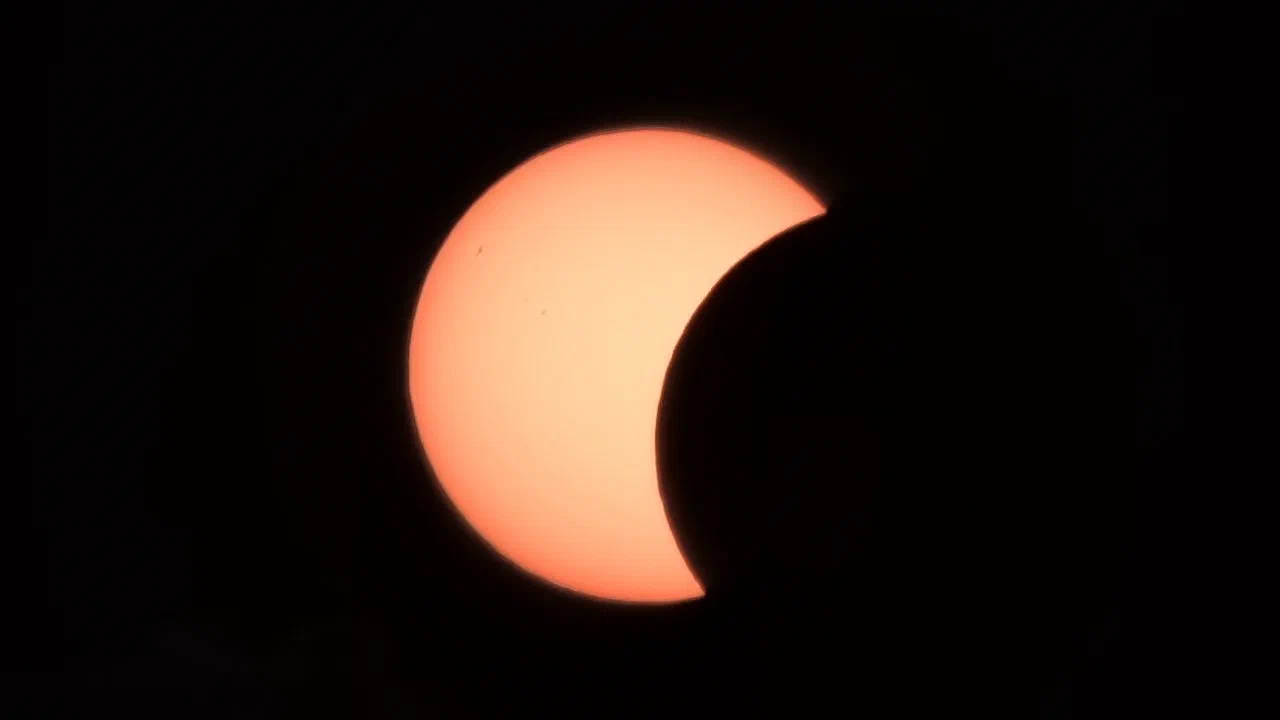
Solar viewThrough a solar filter the Sun is an orange disc with a 'bite' missing on its right side: the Moon has already started to cross it (first contact happened before this recording). The tiny dark specks are sunspots, cooler and magnetically active patches of the photosphere, many of them as large as Earth. Eclipse glasses
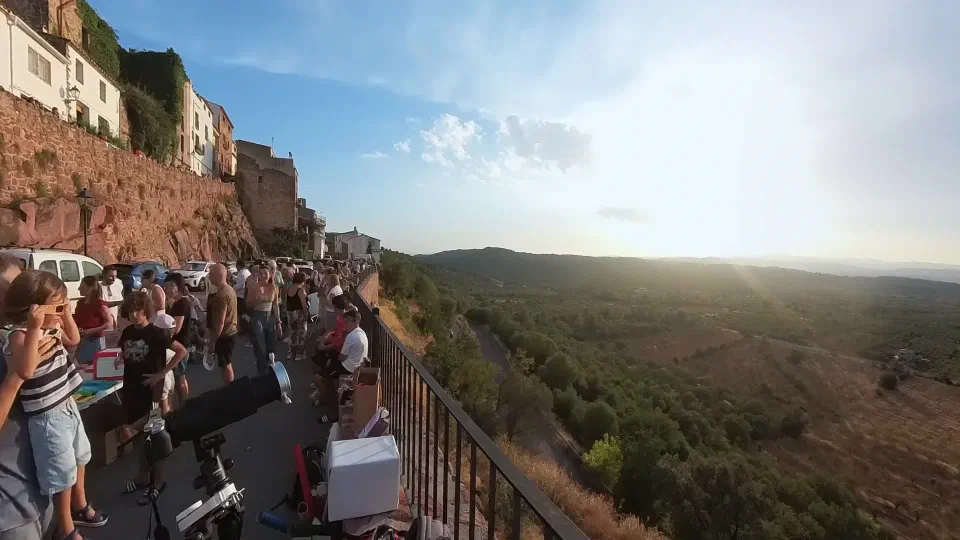
Environmental viewSeveral spectators look up through eclipse glasses. Certified viewers (ISO 12312-2) block more than 99.99% of sunlight and are the only safe way to look directly at a partially eclipsed Sun. No telescope image for this momentSolar view Nearly half the Sun covered
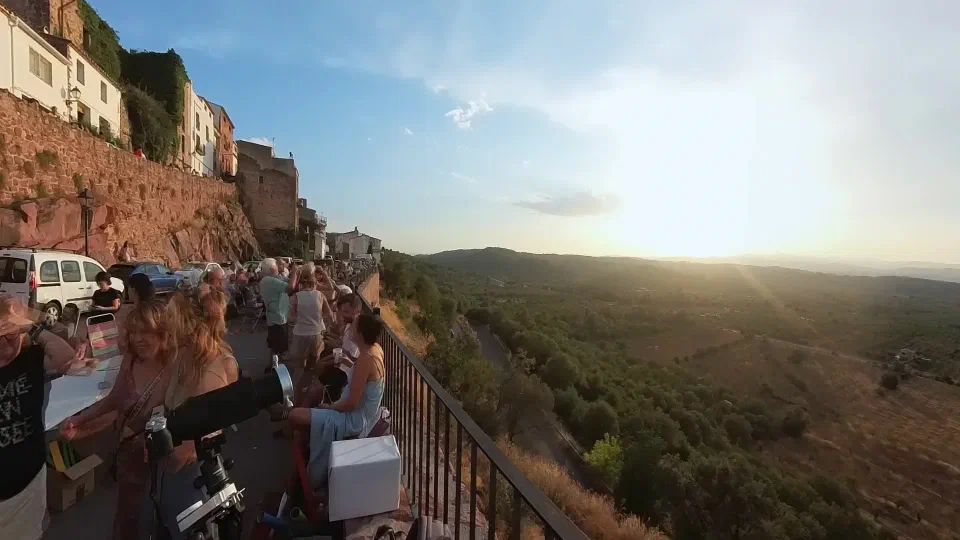
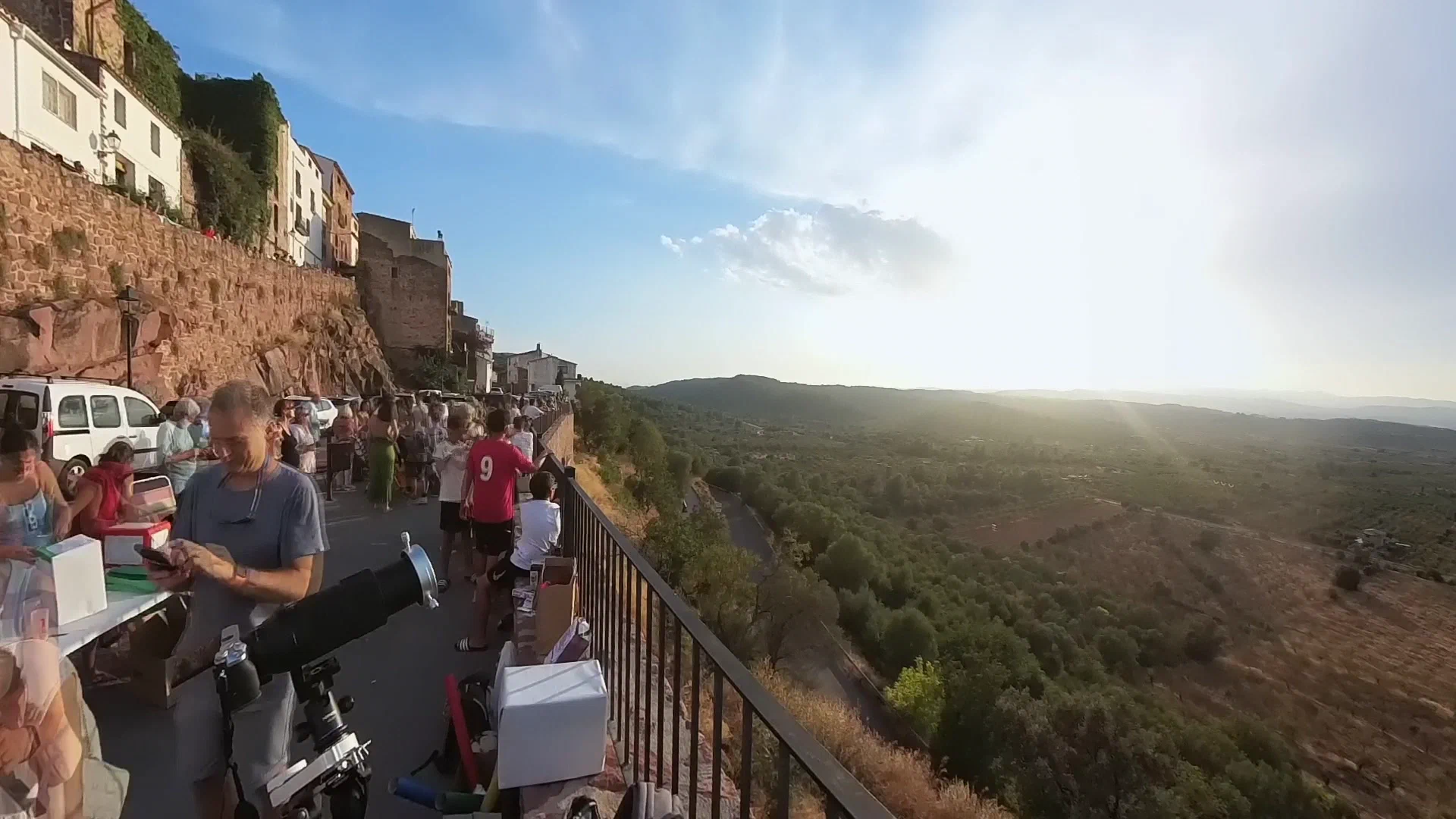
Environmental viewThe Sun (the glare at upper right) sinks slowly towards the hills. This eclipse happens close to sunset, so the landscape takes on warm evening light. 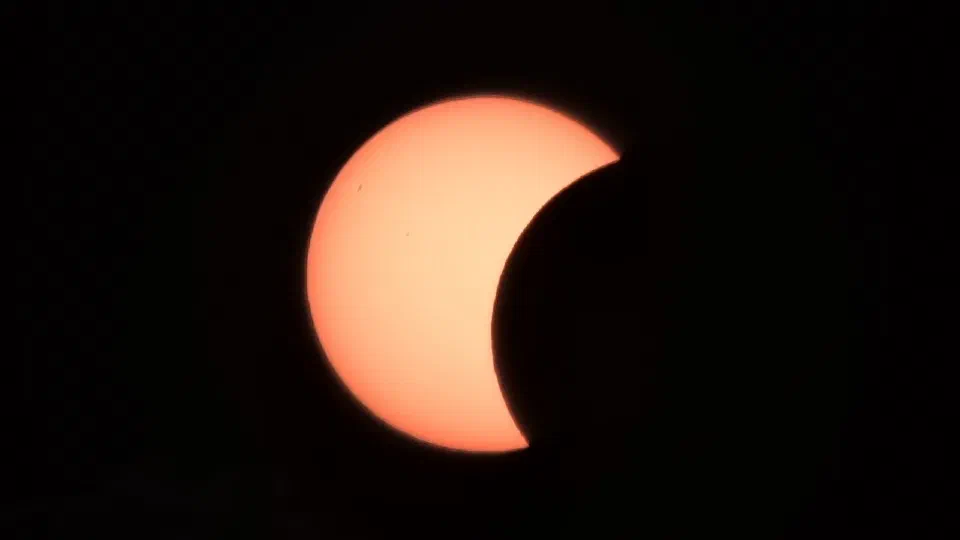
Solar viewNearly half of the Sun's width is covered. The disc is slightly darker towards its edge: this 'limb darkening' happens because near the edge we see the Sun's cooler, higher layers. A sunspot sits near the upper left. - Key moment
A crescent Sun turning orange
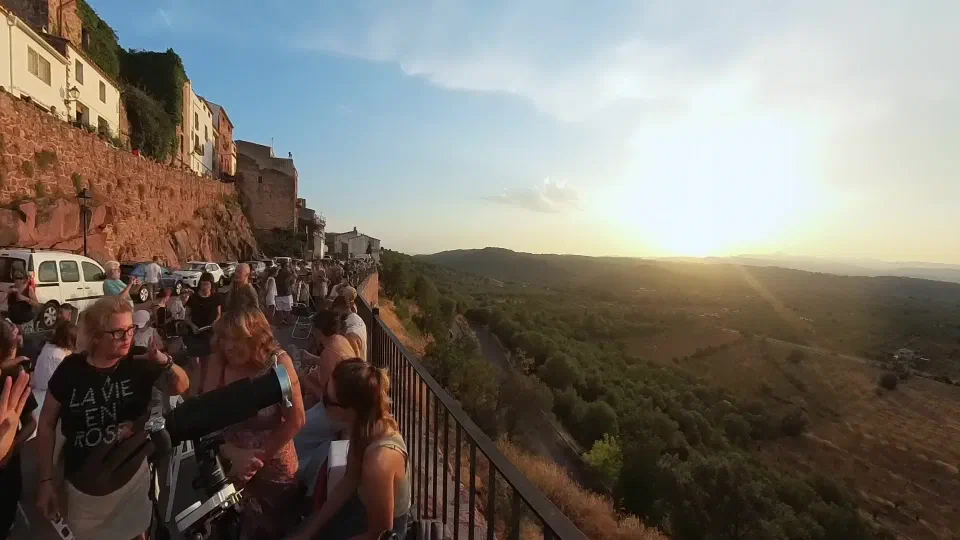
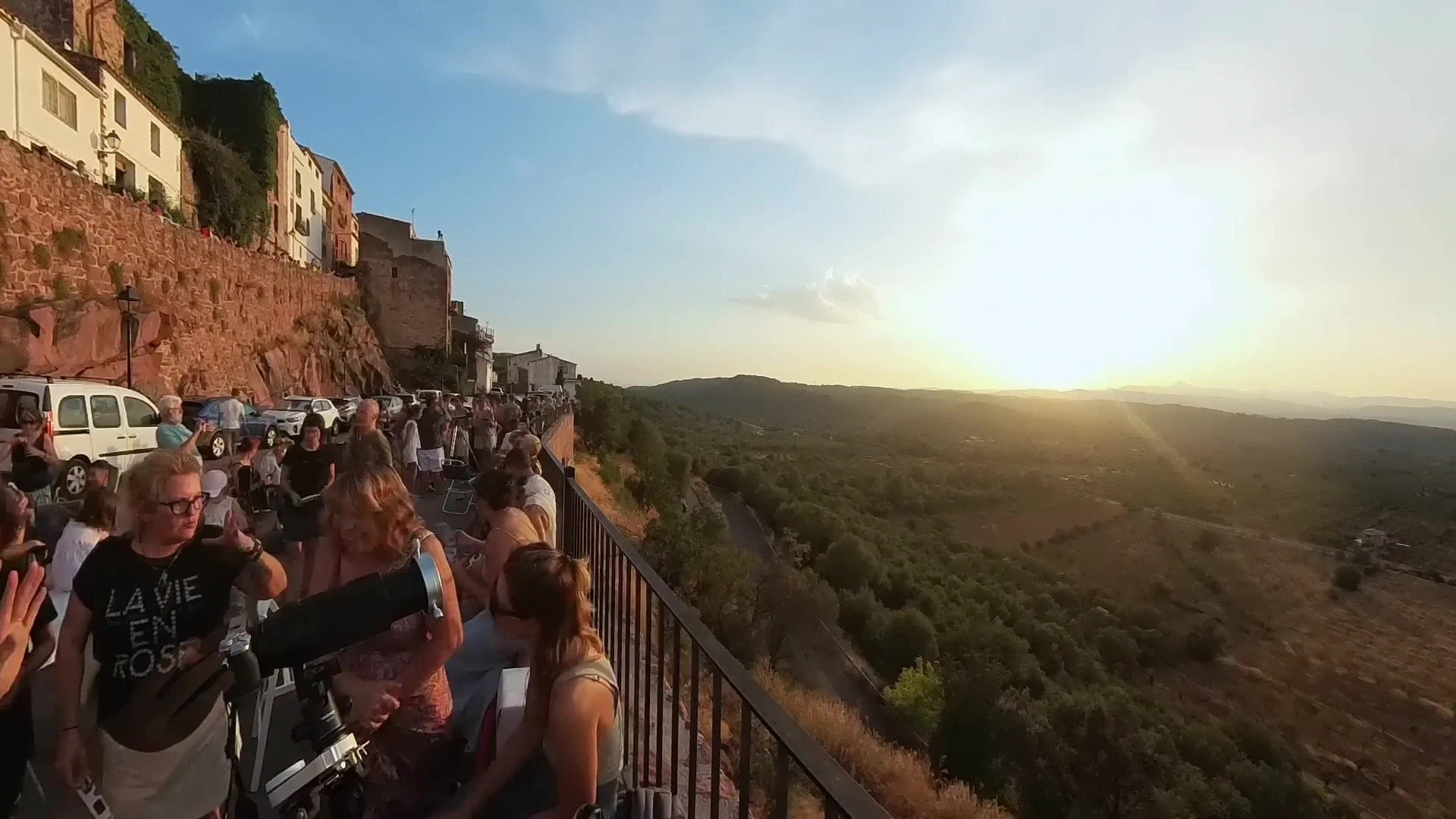
Environmental viewThe Sun has dropped much closer to the horizon, the shadows are long and the light is golden. Part of the dimming is the eclipse itself, but the camera's automatic exposure hides most of it. 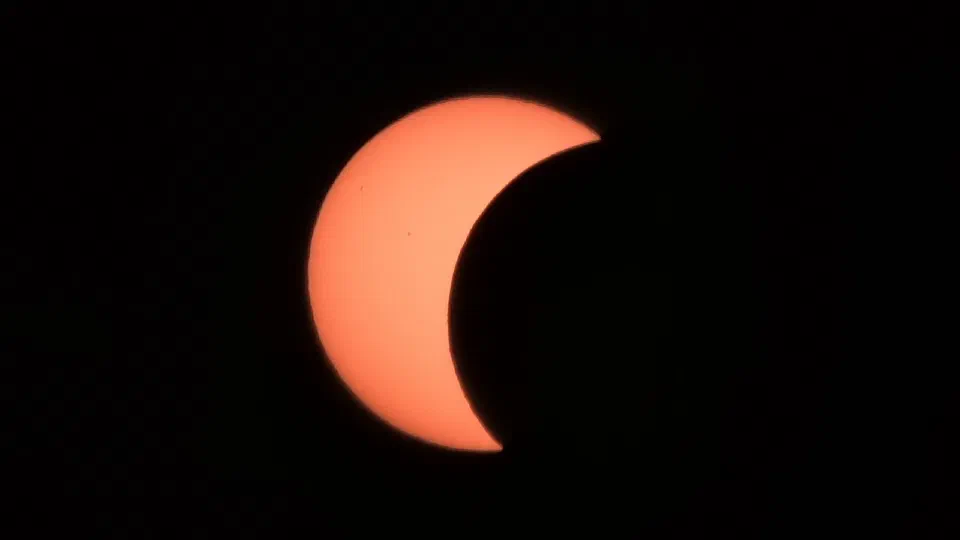
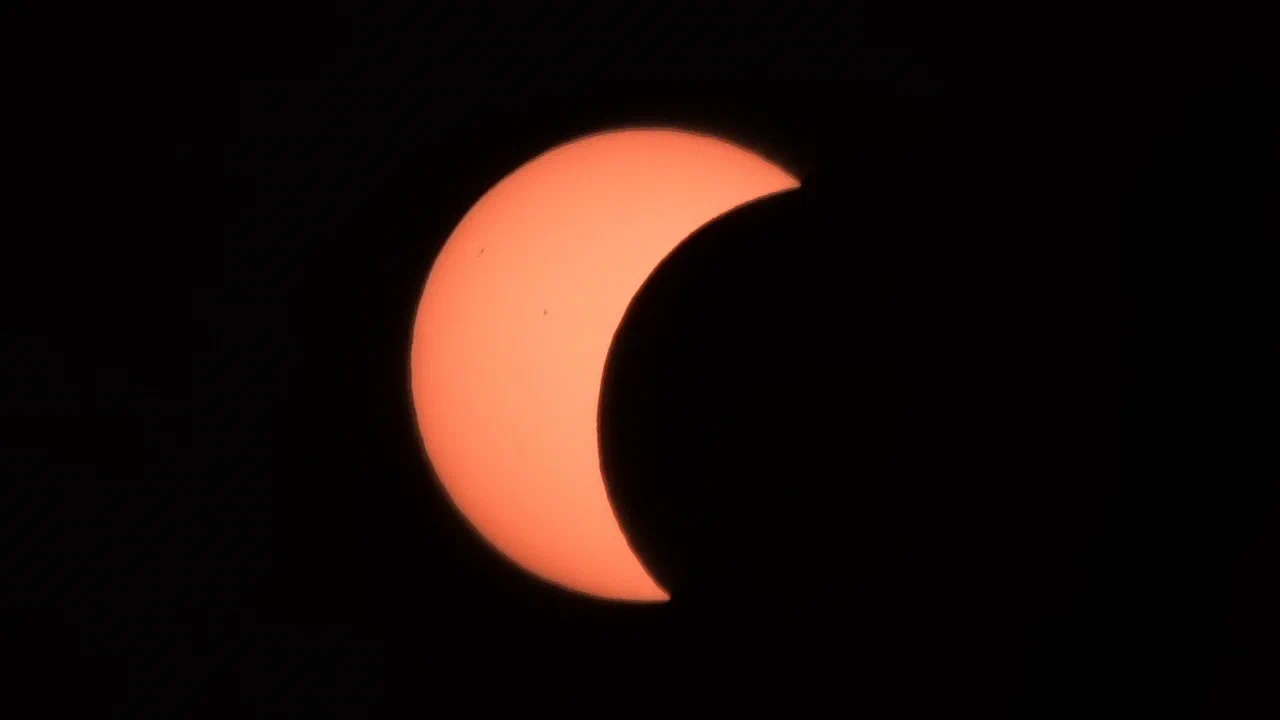
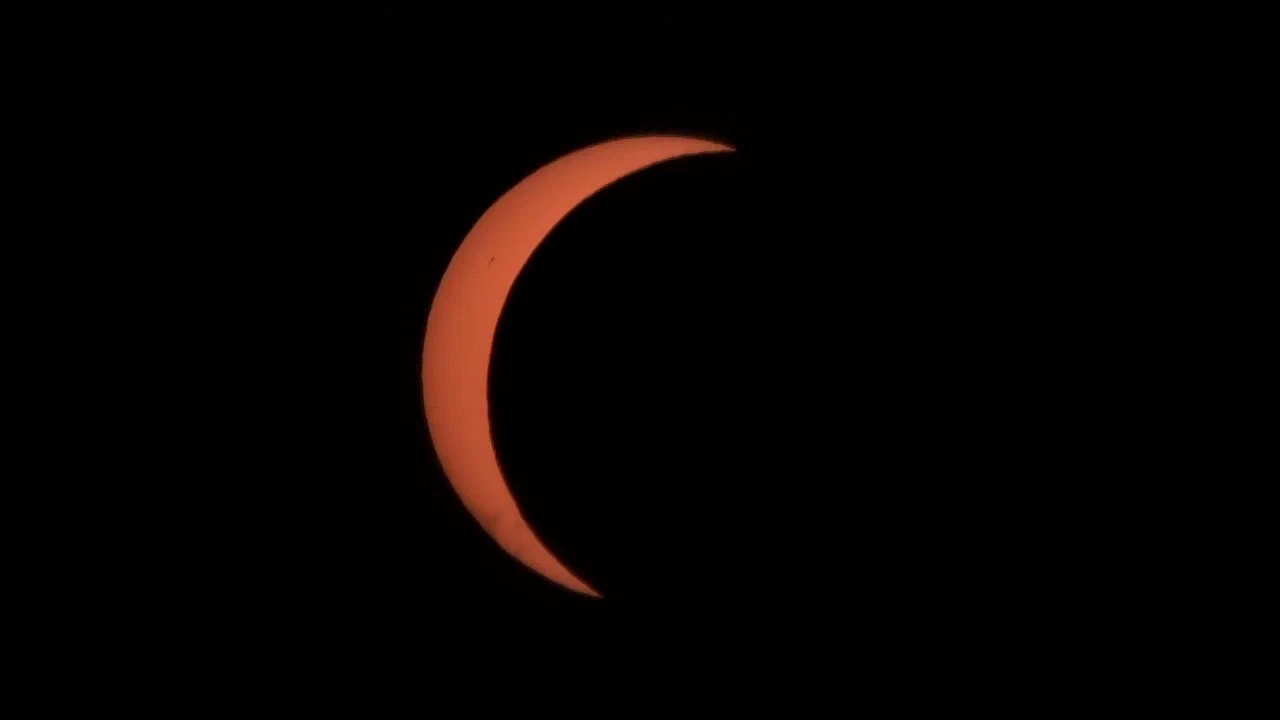
Solar viewMore than half of the Sun is hidden and what is left is a crescent, its colour shifting from yellow to deep orange. As the Sun sinks, its light crosses more air, and the air scatters blue light away (Rayleigh scattering): the same reason sunsets are red. - Key moment
Only a thin crescent left
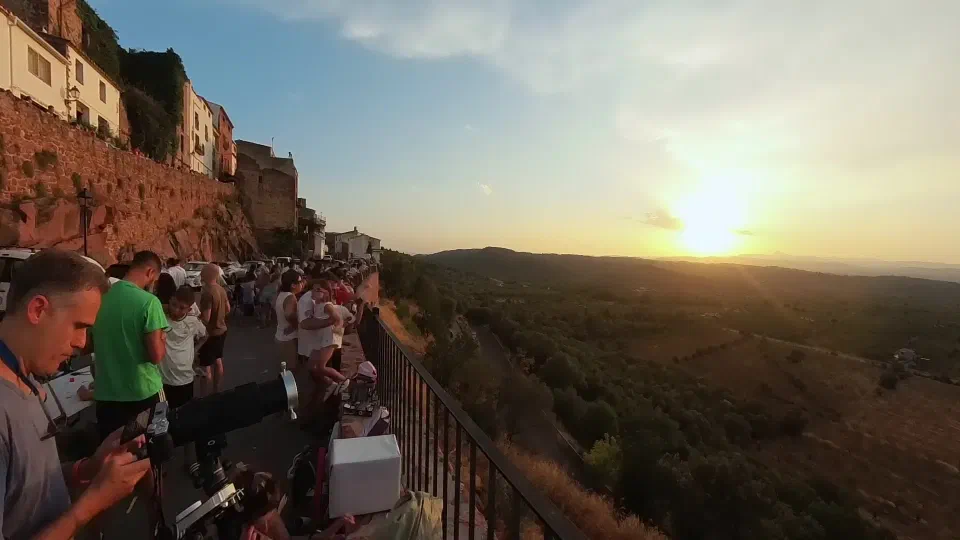
Environmental viewThe Sun is just above the distant hills. Spectators focus on it through their glasses and telescopes as the big moment approaches. 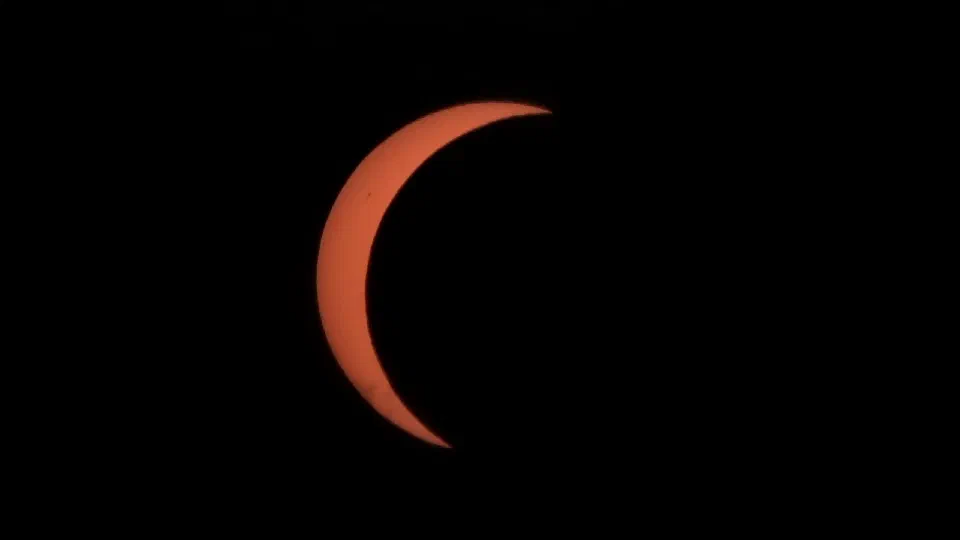
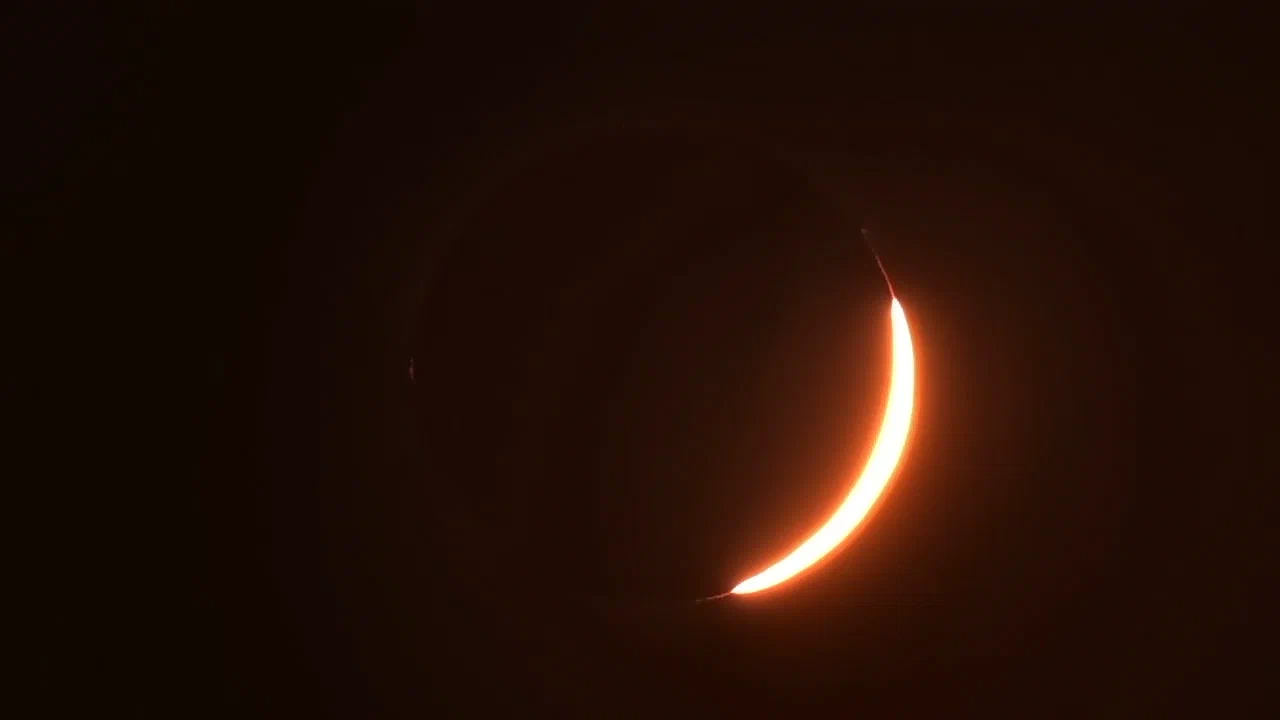
Solar viewOnly a slender crescent is left, with roughly nine-tenths of the Sun's width covered. Even this sliver is bright enough to damage the eyes, so the solar filter is still essential. - Key moment
The Moon's shadow arrives
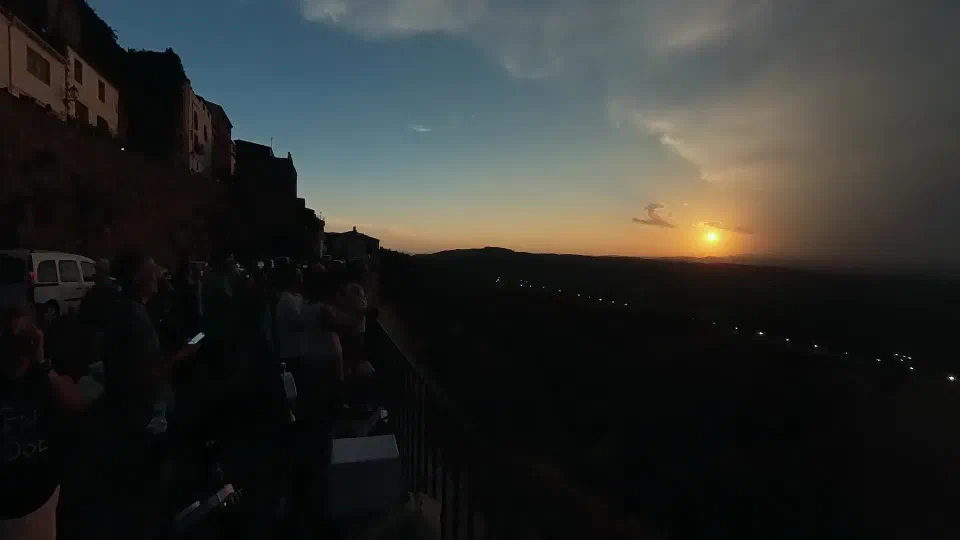
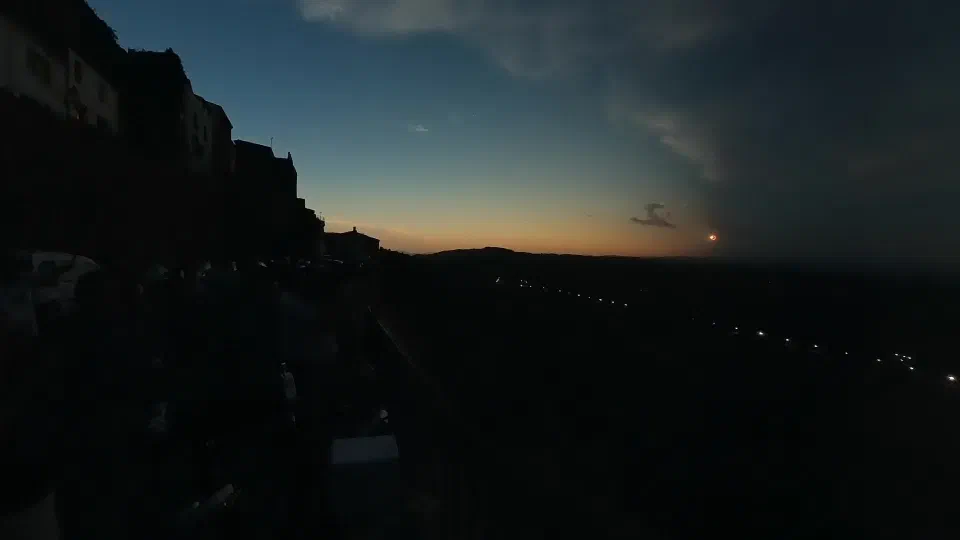
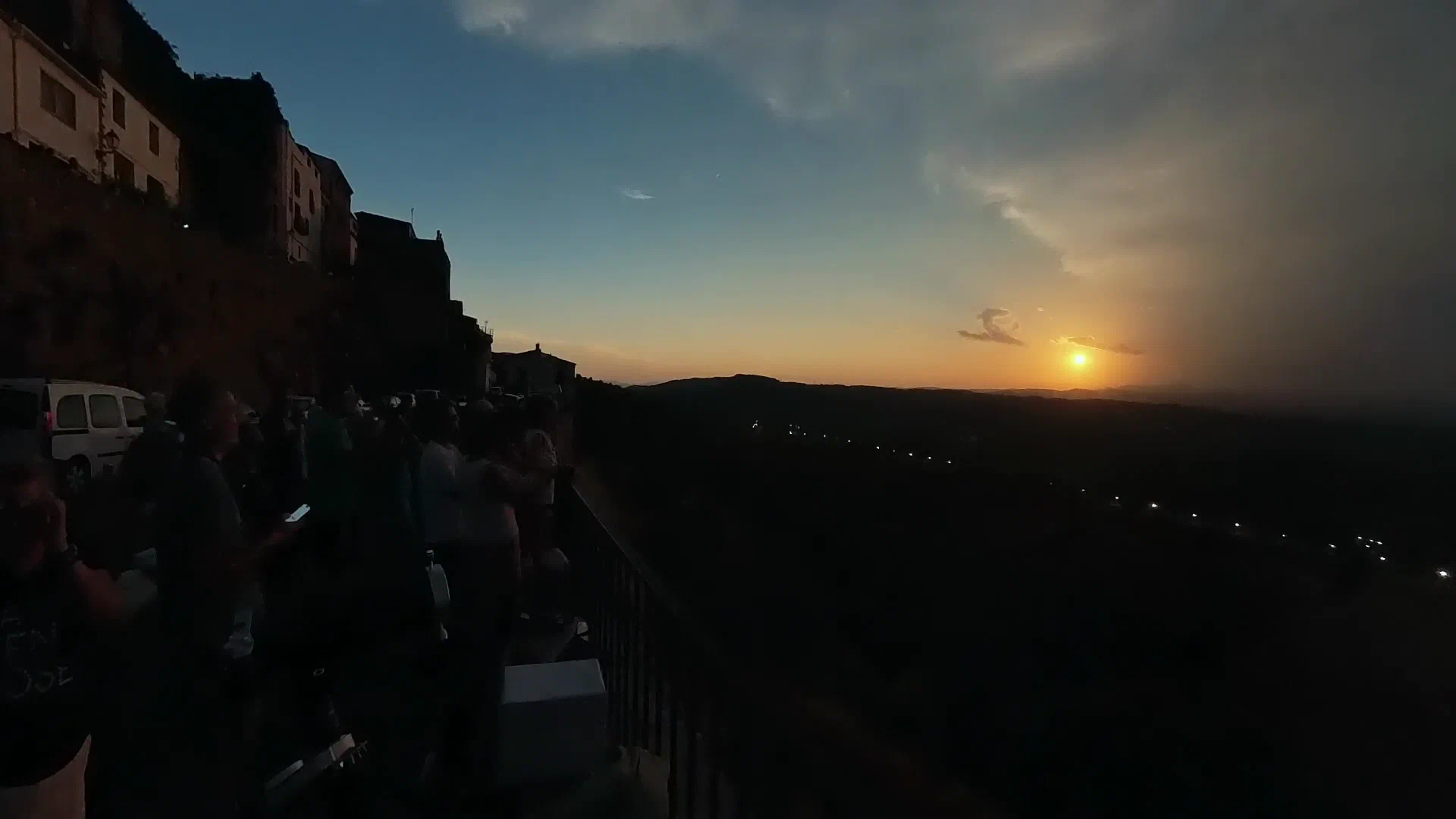
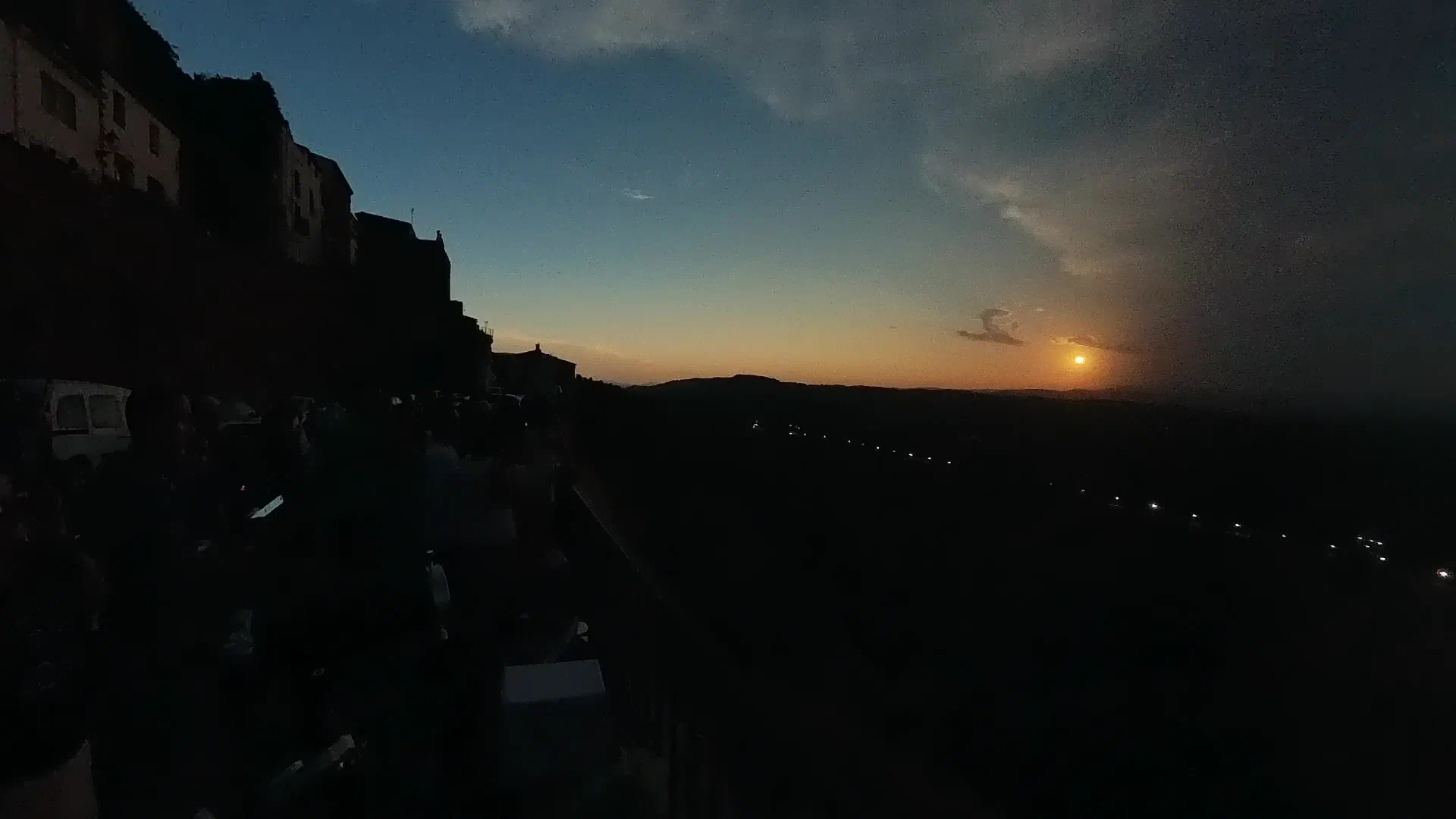
Environmental viewA sudden, dramatic darkening. To the right of the Sun a dark, grainy 'wall' fills the sky: the umbra, the Moon's full shadow, sweeping towards us through the atmosphere at several thousand kilometres per hour. Down in the valley the string of street lights has switched on, because their light sensors think night has fallen. 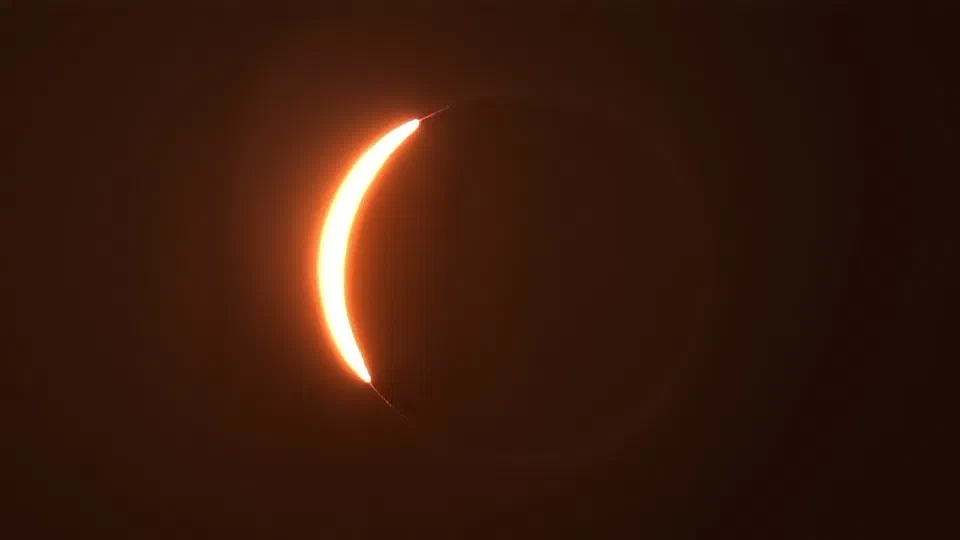
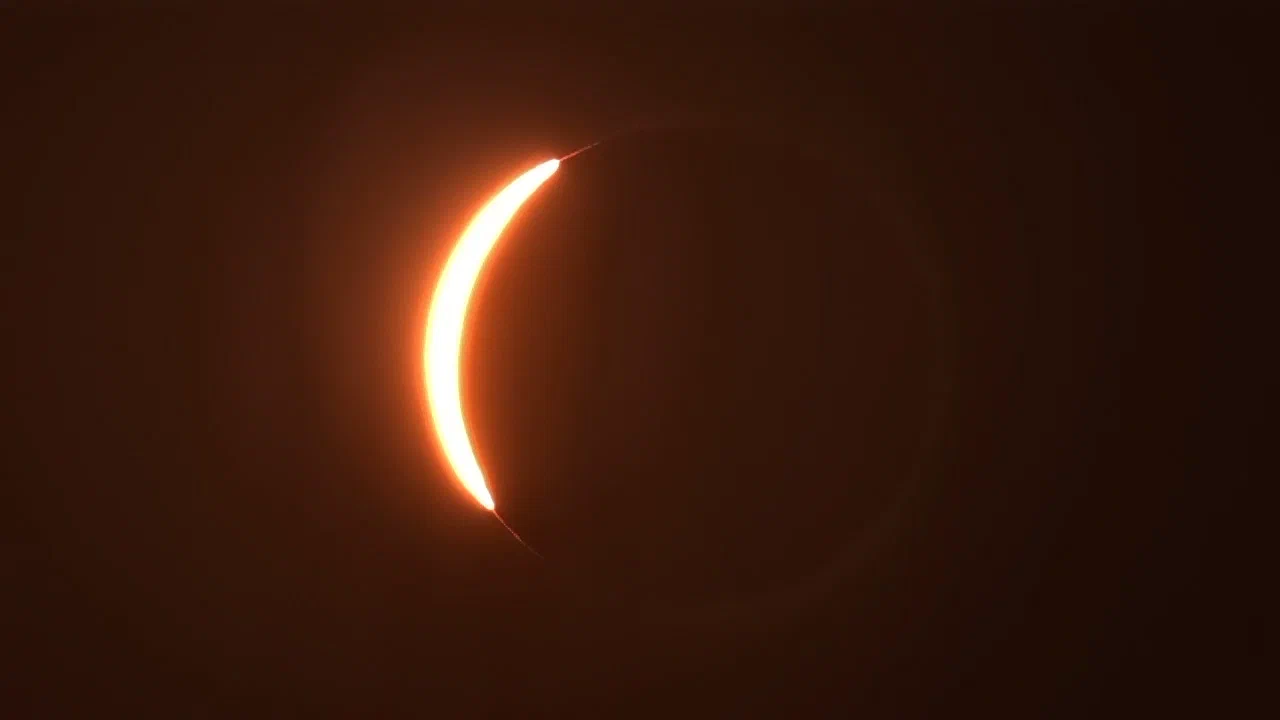
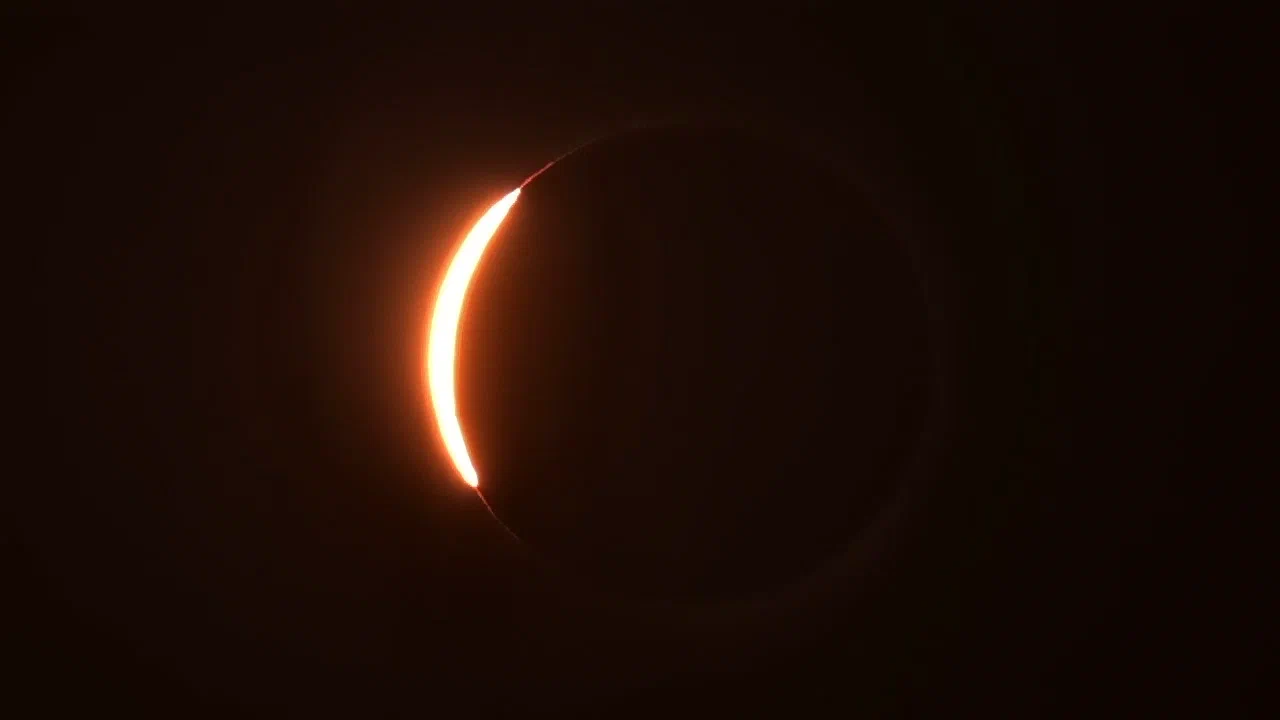
Solar viewReal-time footage, about half a minute before totality. The crescent is very thin but still dazzling (overexposed white). A faint glow surrounds it, and against that glow you can trace the dark disc of the Moon. First glimpse of the chromosphere
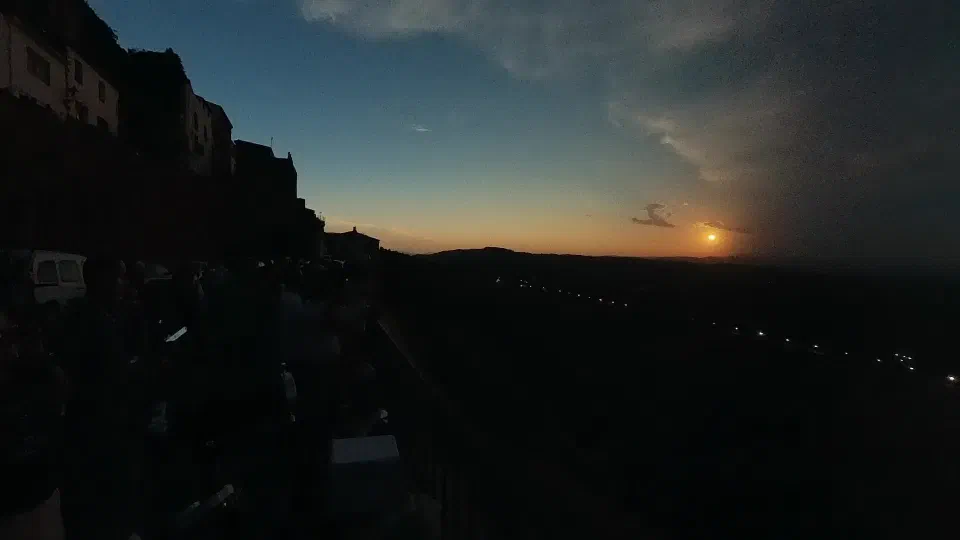
Environmental viewThe shadow wall keeps advancing and the sky darkens by the second. The Sun has shrunk to a small orange point just above the hills. 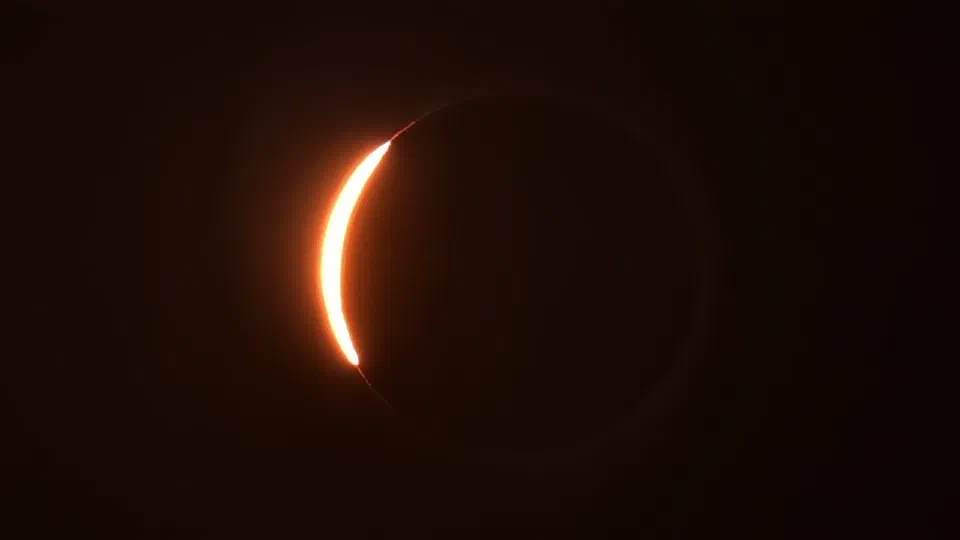
Solar viewThe crescent keeps thinning and a thin reddish line starts to show at its tips: an early glimpse of the chromosphere, a thin layer of the Sun's atmosphere that glows red. - Key moment
Baily's beads
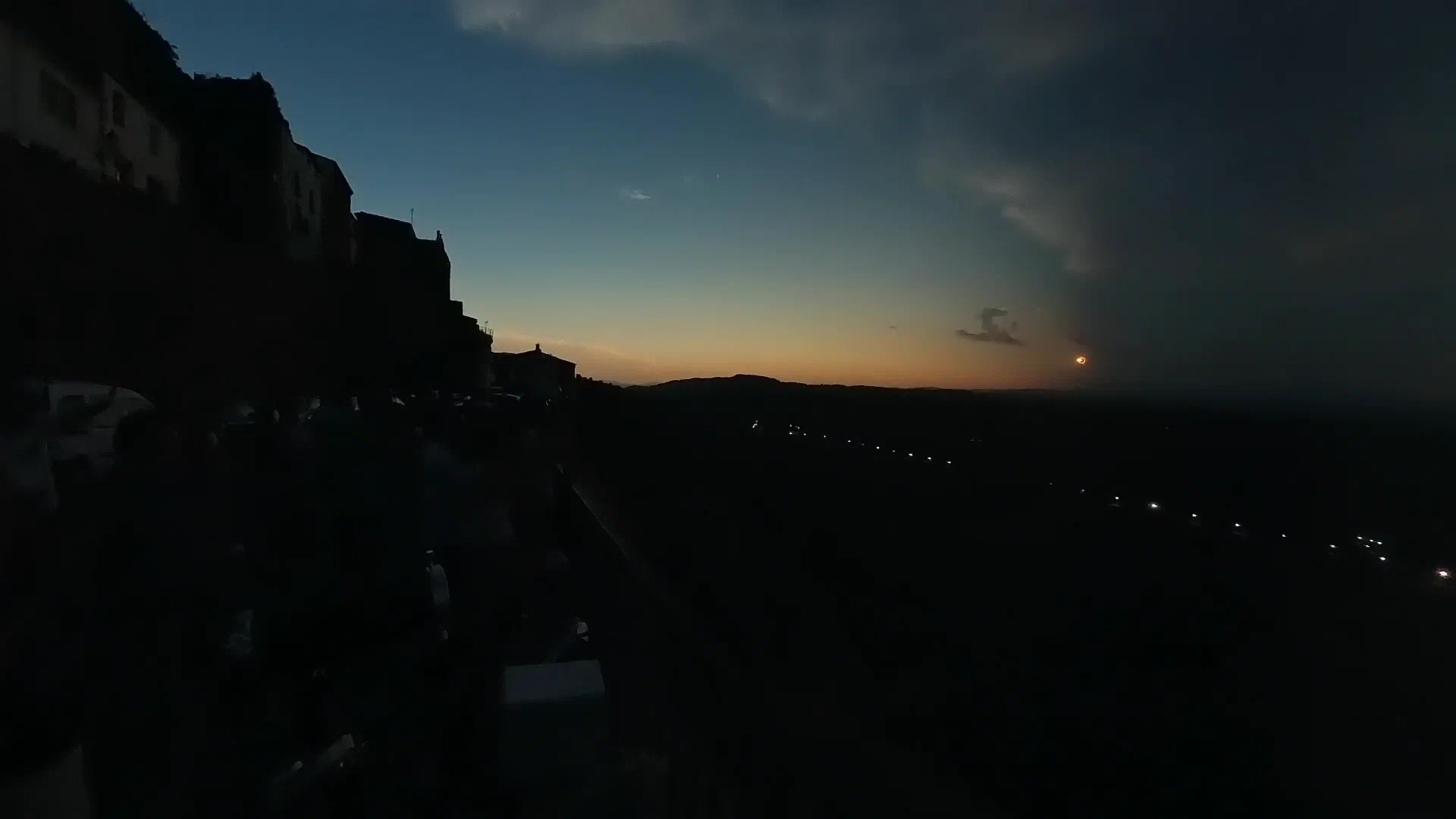
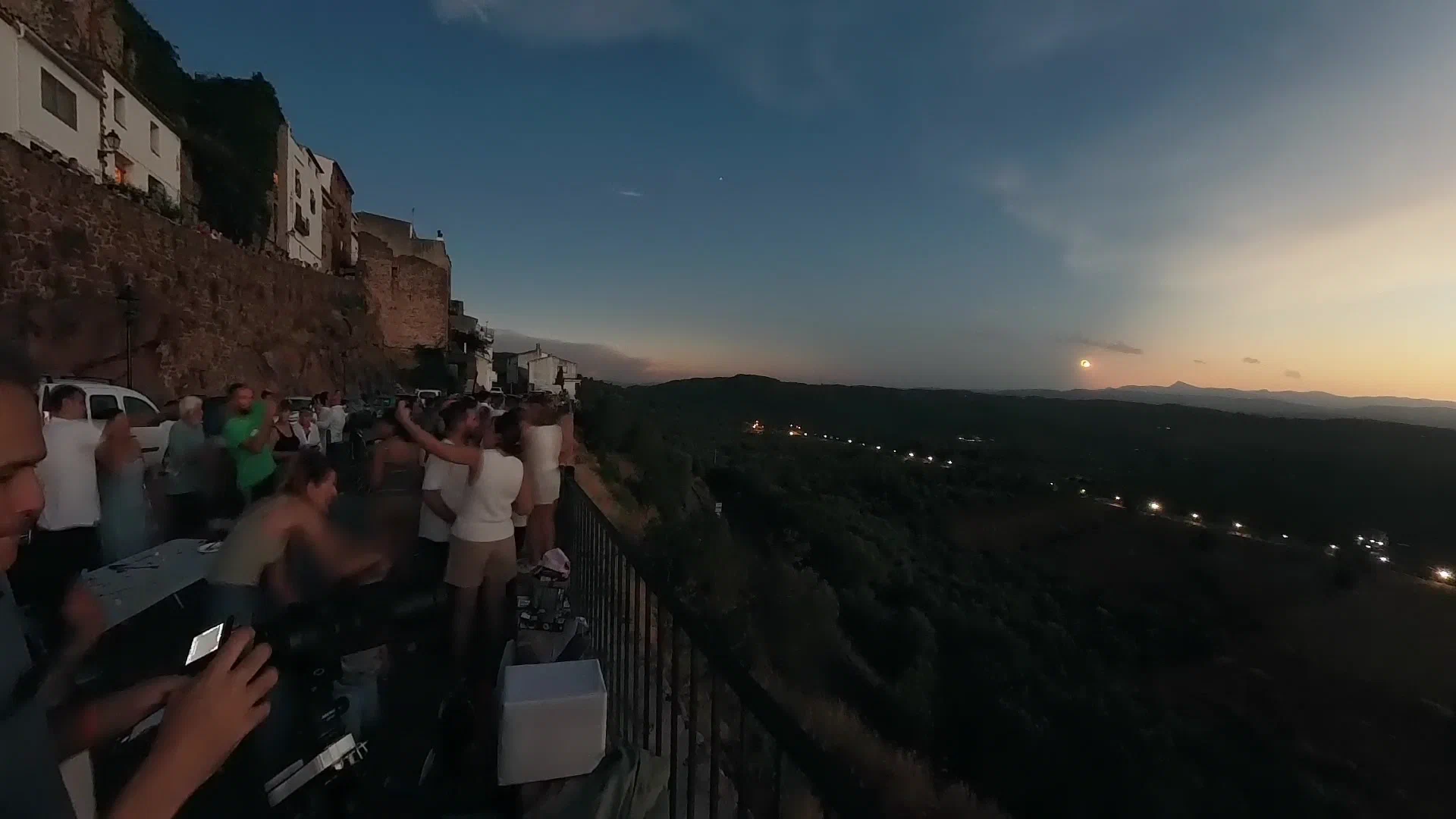
Environmental viewThe Sun is reduced to a tiny spark, and the shadow has almost swallowed the sky. 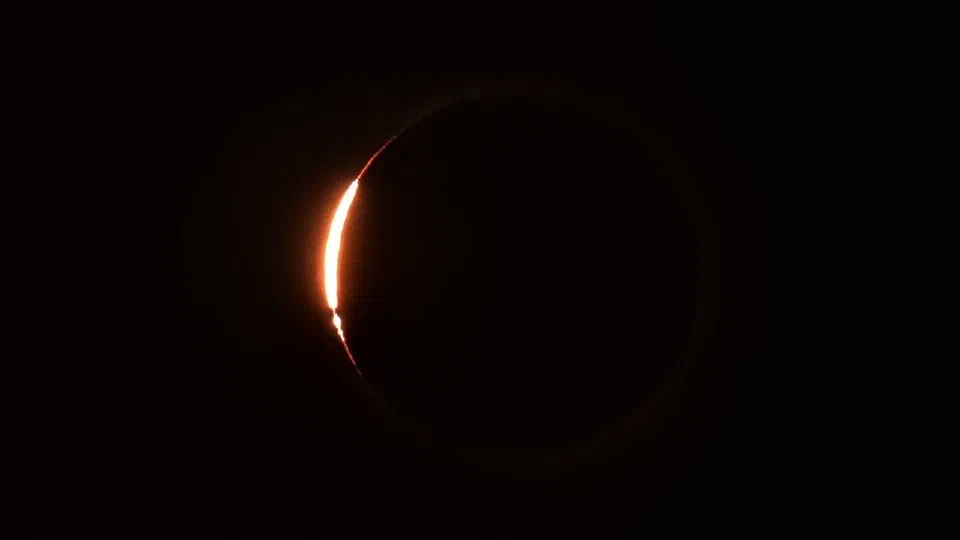
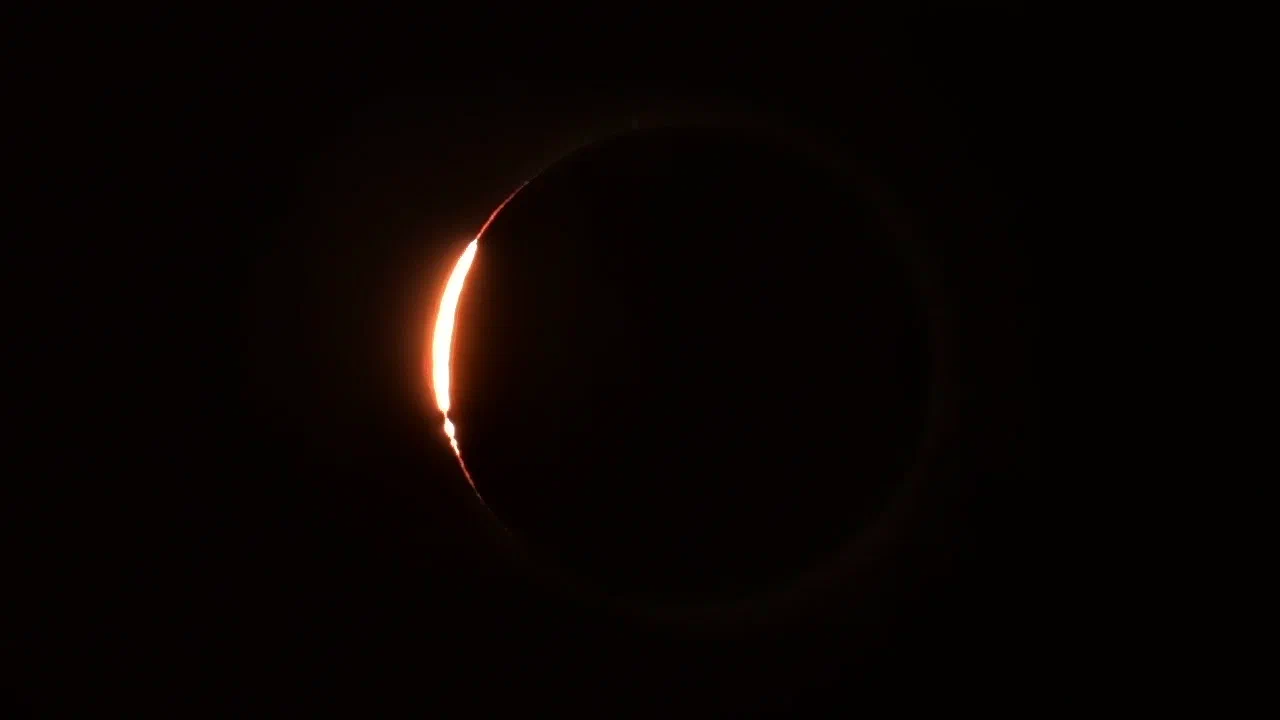
Solar viewThe crescent breaks into bright dots at its lower end. These are Baily's beads: the Moon's edge isn't smooth, so sunlight still shines through the valleys between lunar mountains while the peaks already block it. - Key moment
Chromosphere and the first prominence
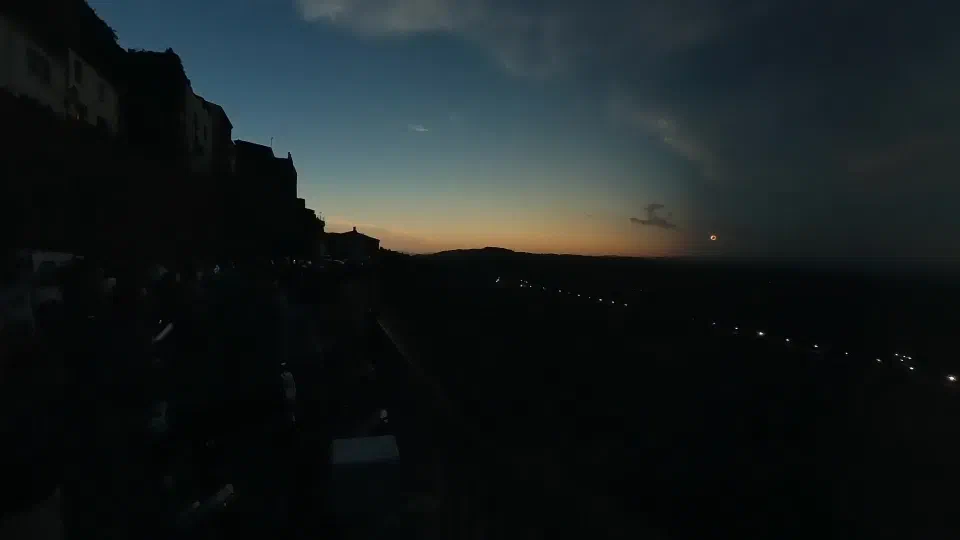
Environmental viewIn the wide view the Sun already looks like a tiny ring. This view is in sync with the telescope to within a few seconds. 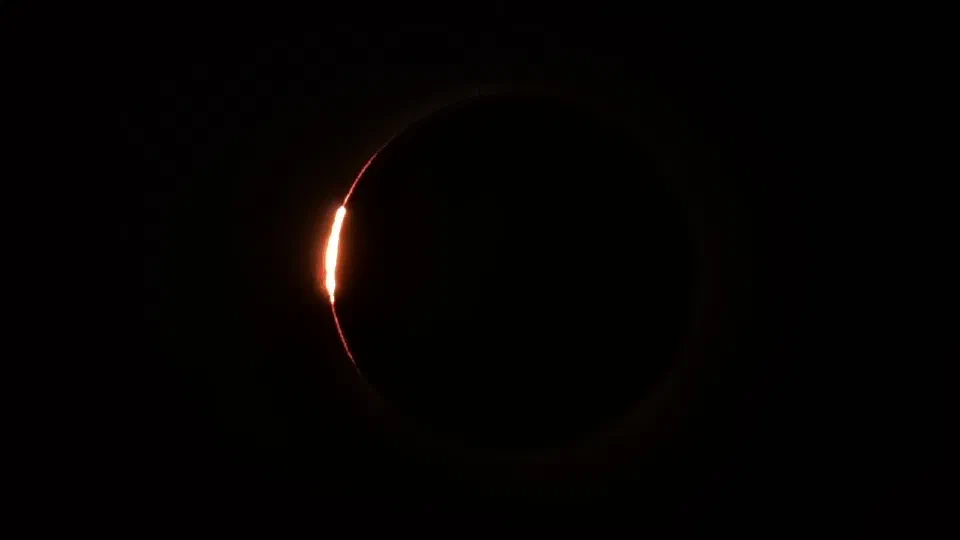
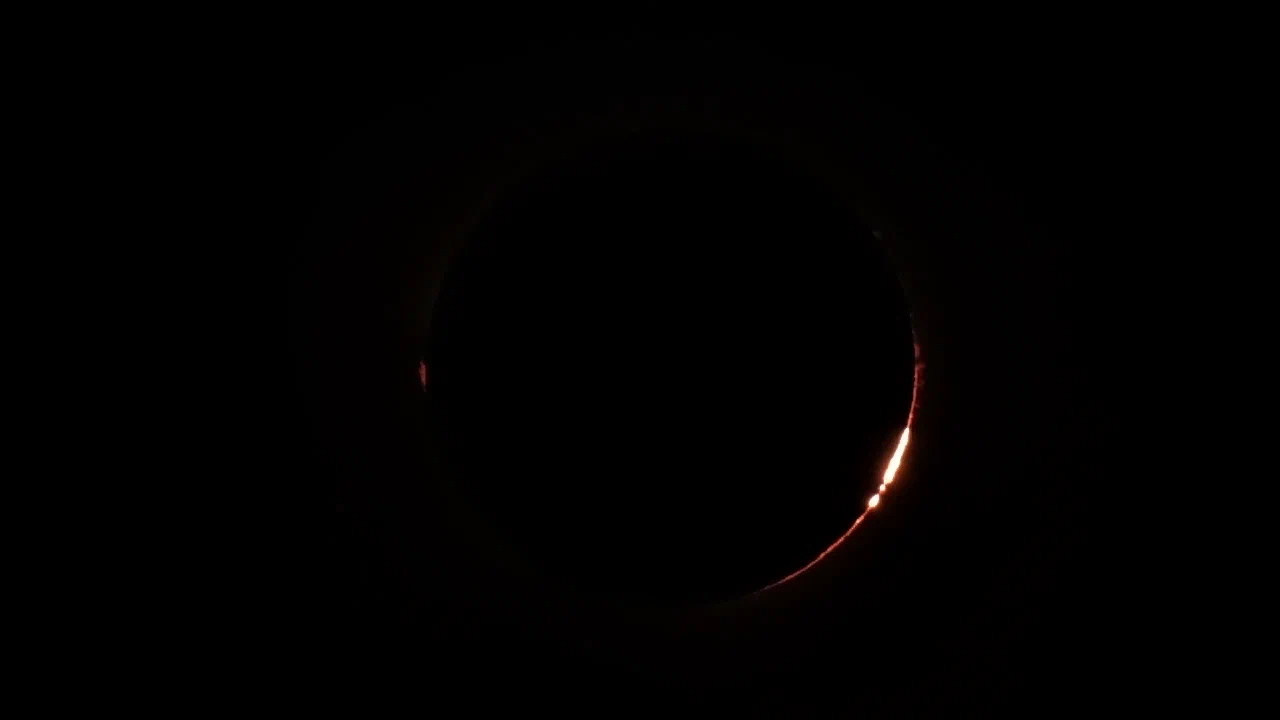
Solar viewAlmost all direct sunlight is gone. A pink-red arc appears along the Moon's edge: the chromosphere (the 'colour sphere'), glowing in the red light of hydrogen (H-alpha). On the left edge the first prominence pops into view, a cloud of hot plasma held up by magnetic fields. - Key moment
Second contact: the diamond ring
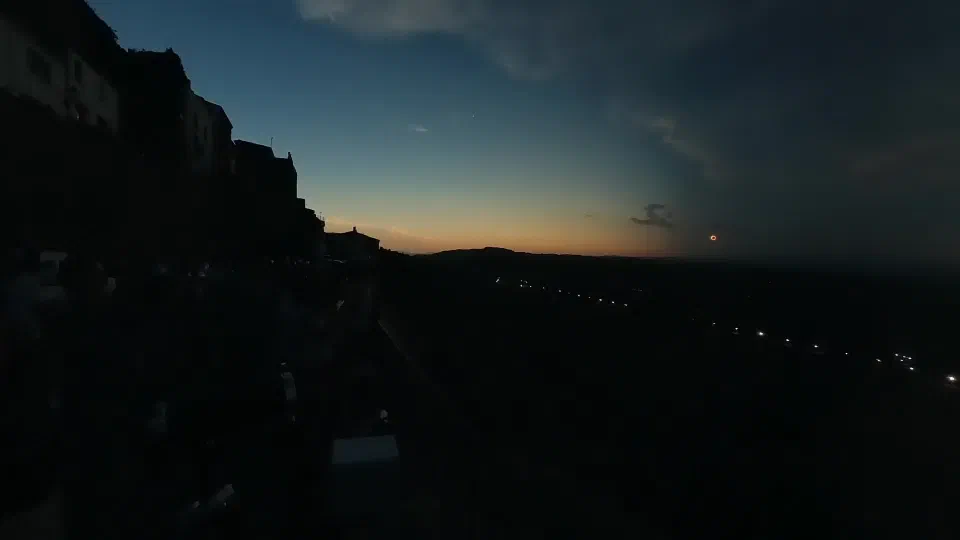
Environmental viewThe shadow now covers the whole sky around the Sun. Totality is starting. 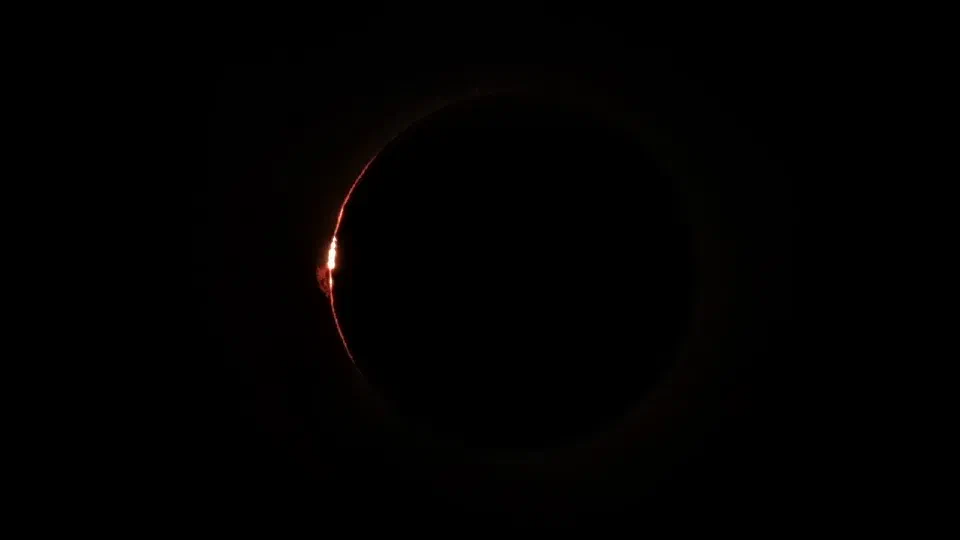
Solar viewSecond contact (C2). The very last bead of sunlight shines next to the prominence like a diamond on a ring: the 'diamond ring' effect. Seconds later, totality begins. - Key moment
Totality
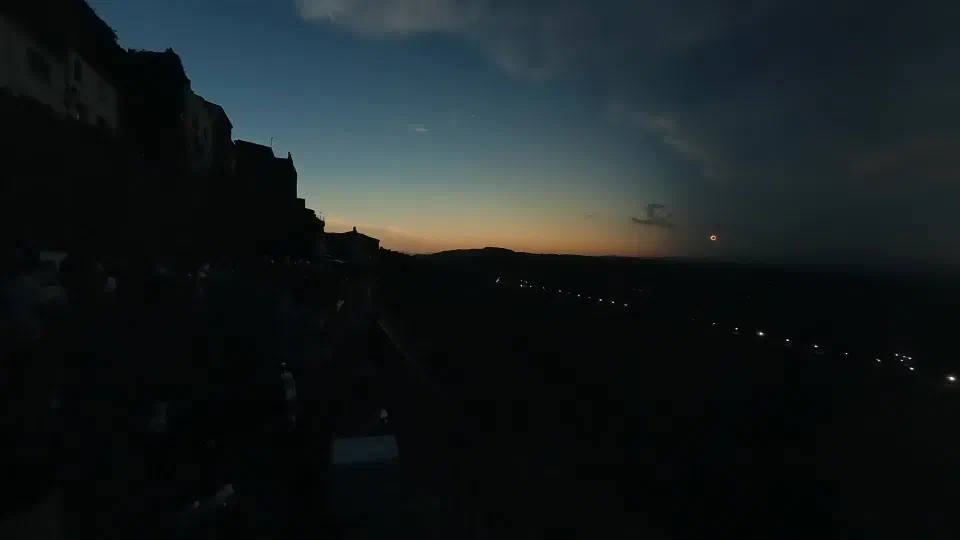
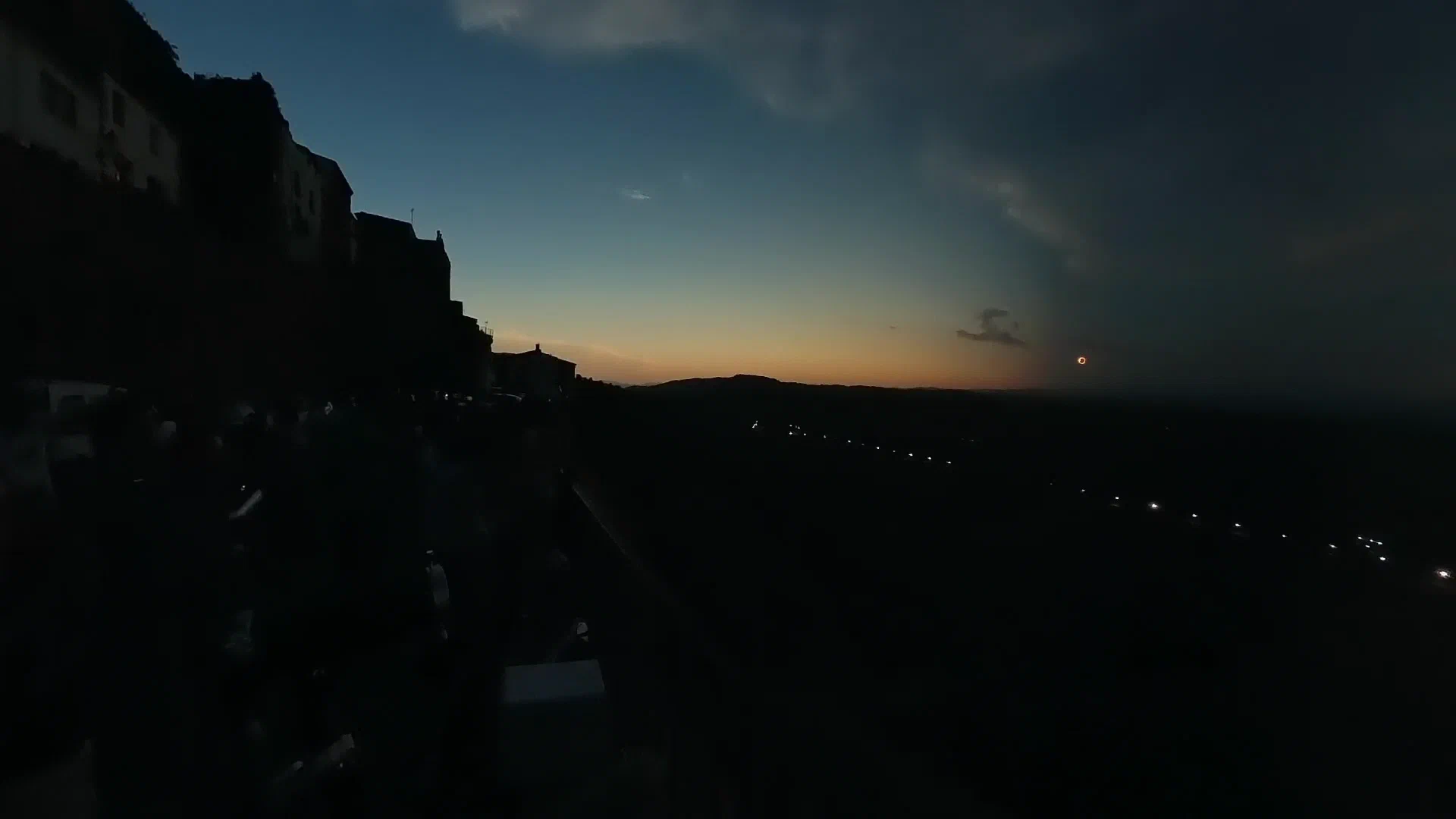
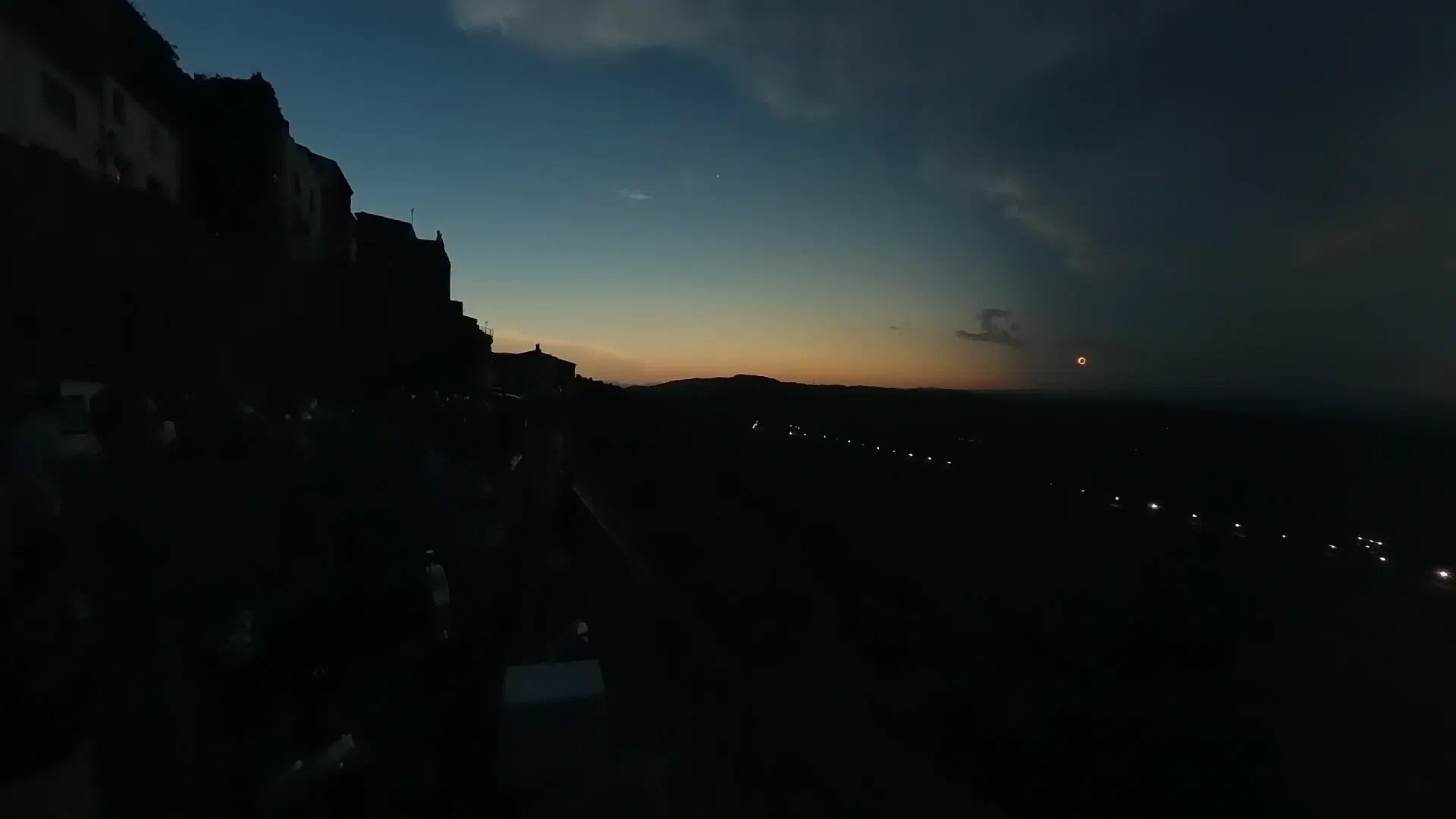
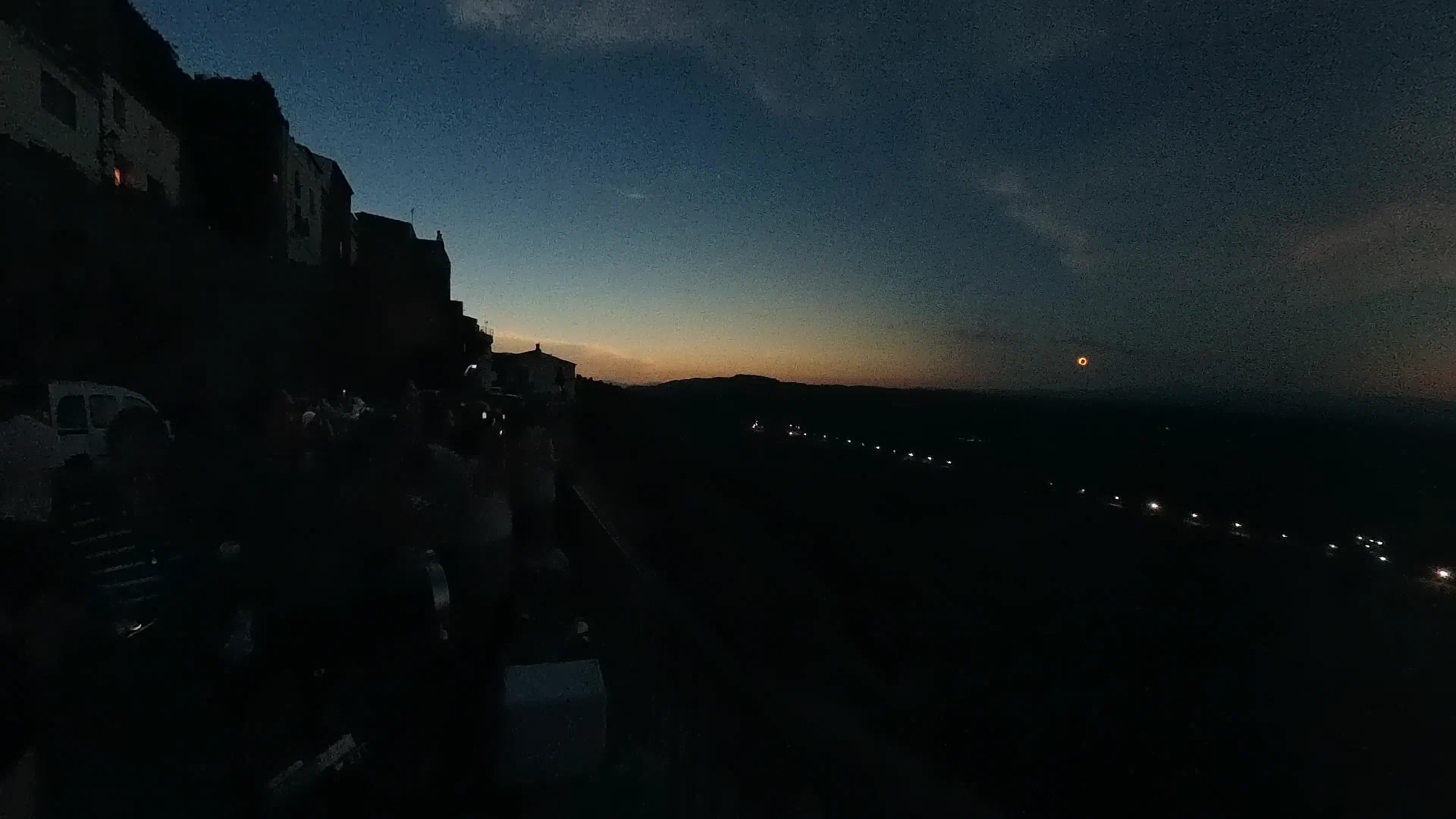
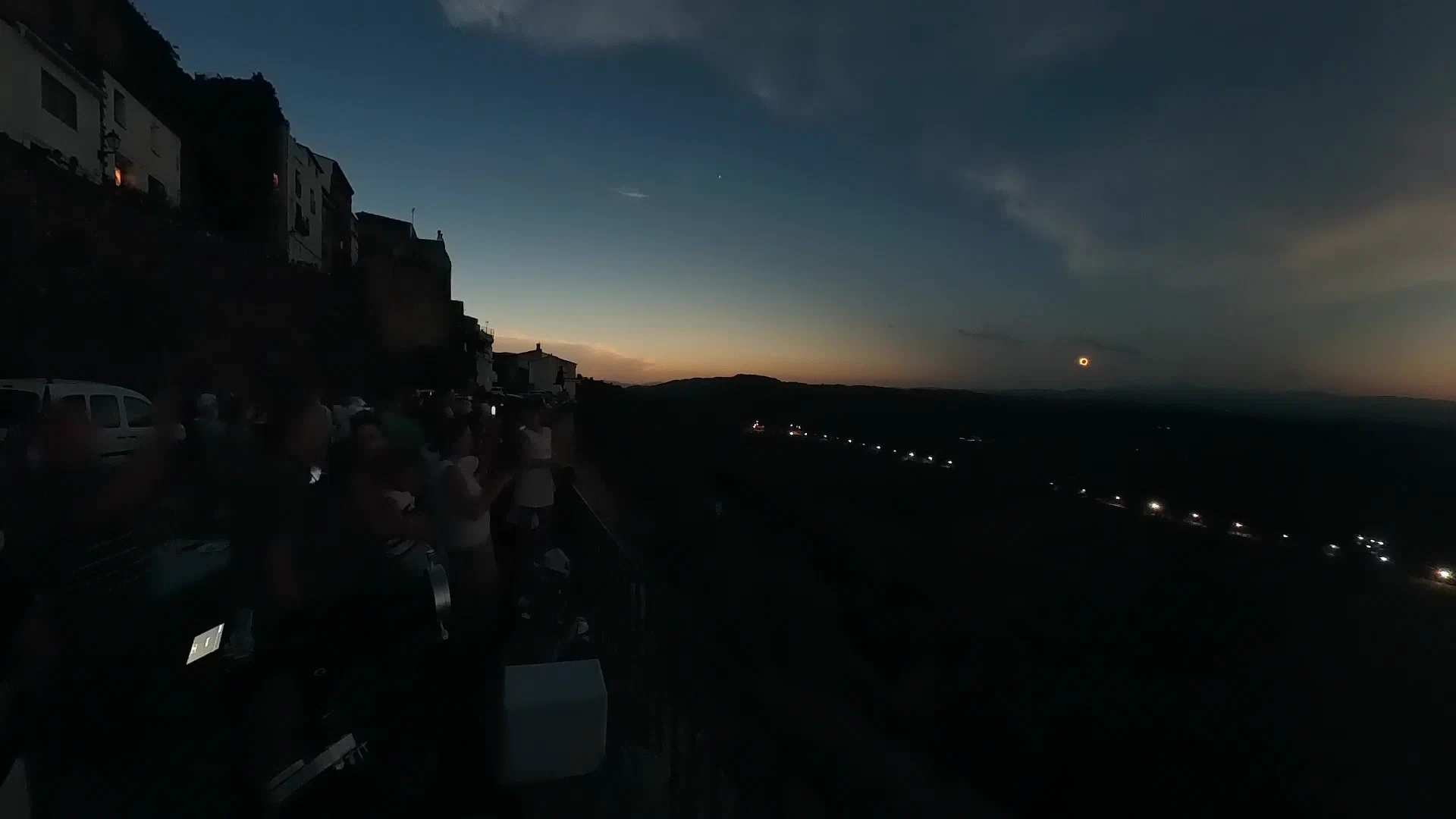
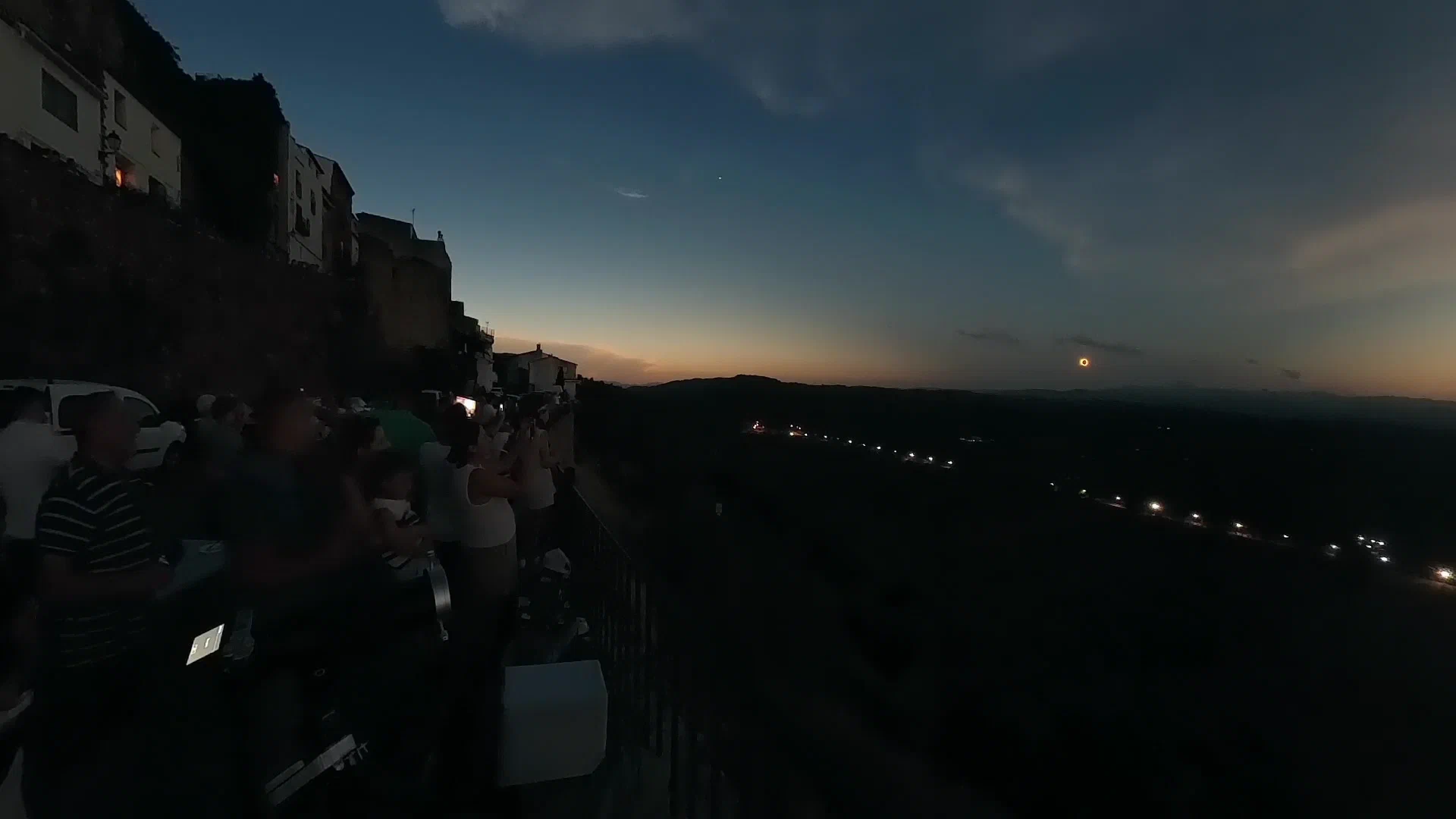
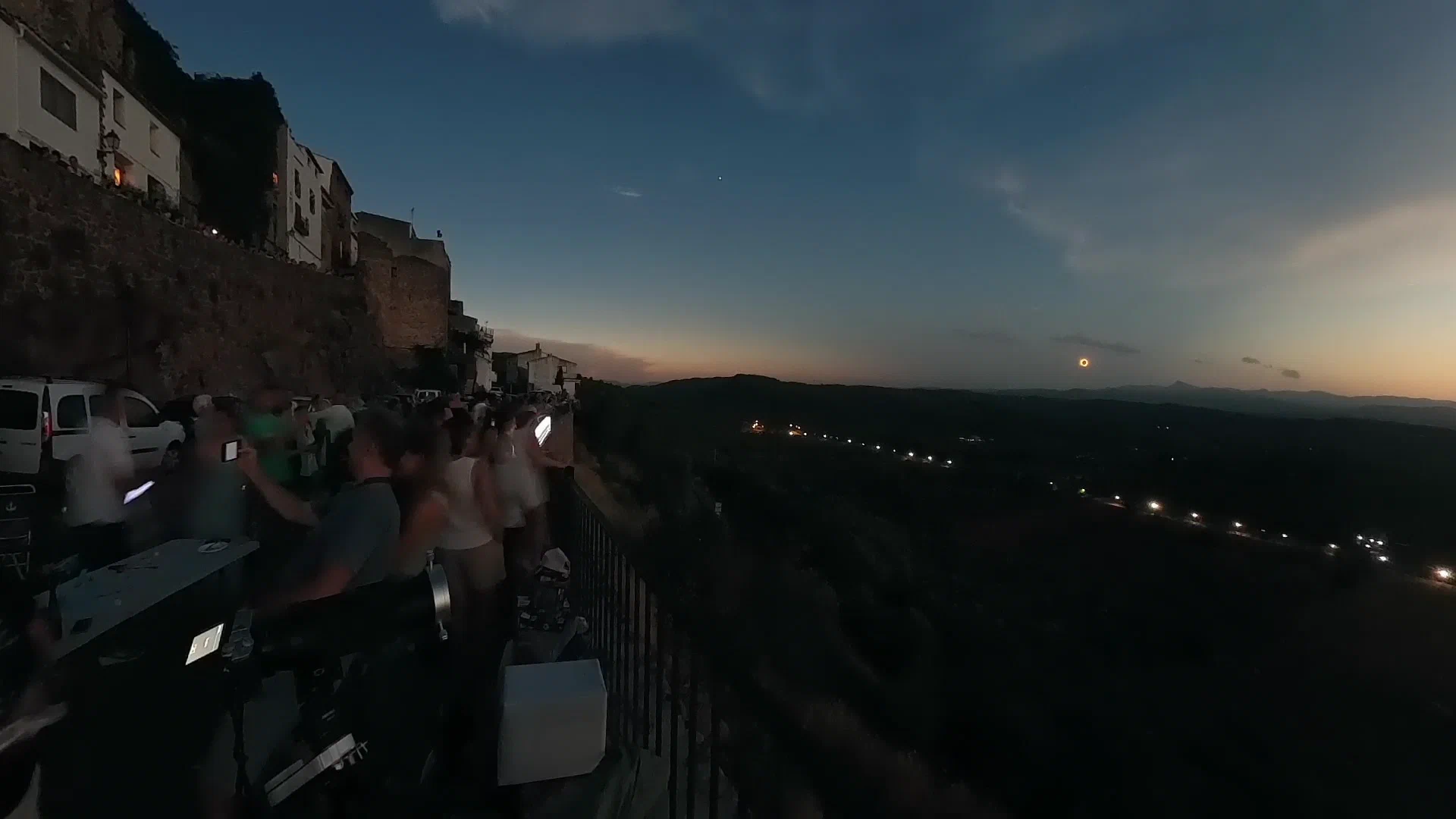
Environmental viewThe '360° sunset'. Overhead the sky is a deep twilight blue, while all around the horizon glows orange: sunlight from outside the Moon's shadow, many kilometres away. The valley street lights shine, and the eclipsed Sun is a small black ring just above the hills. 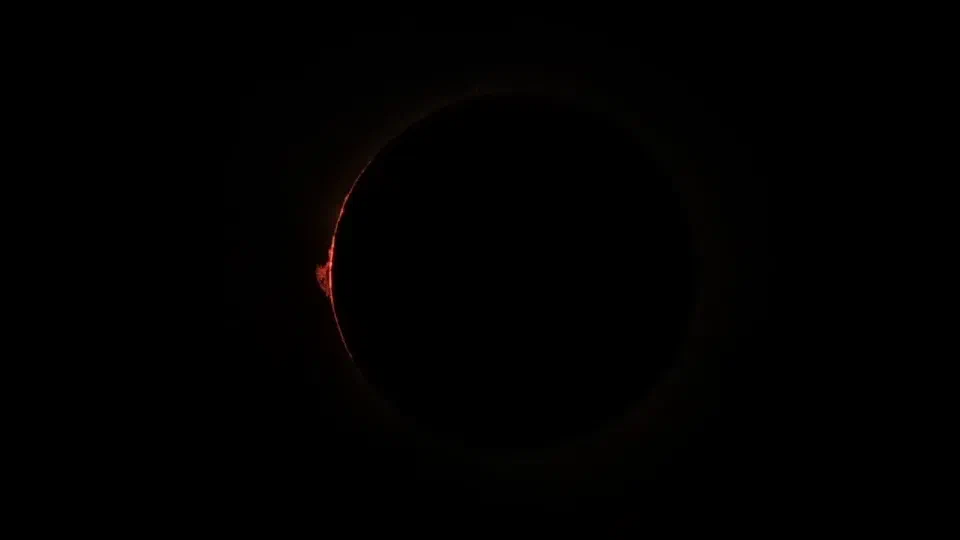
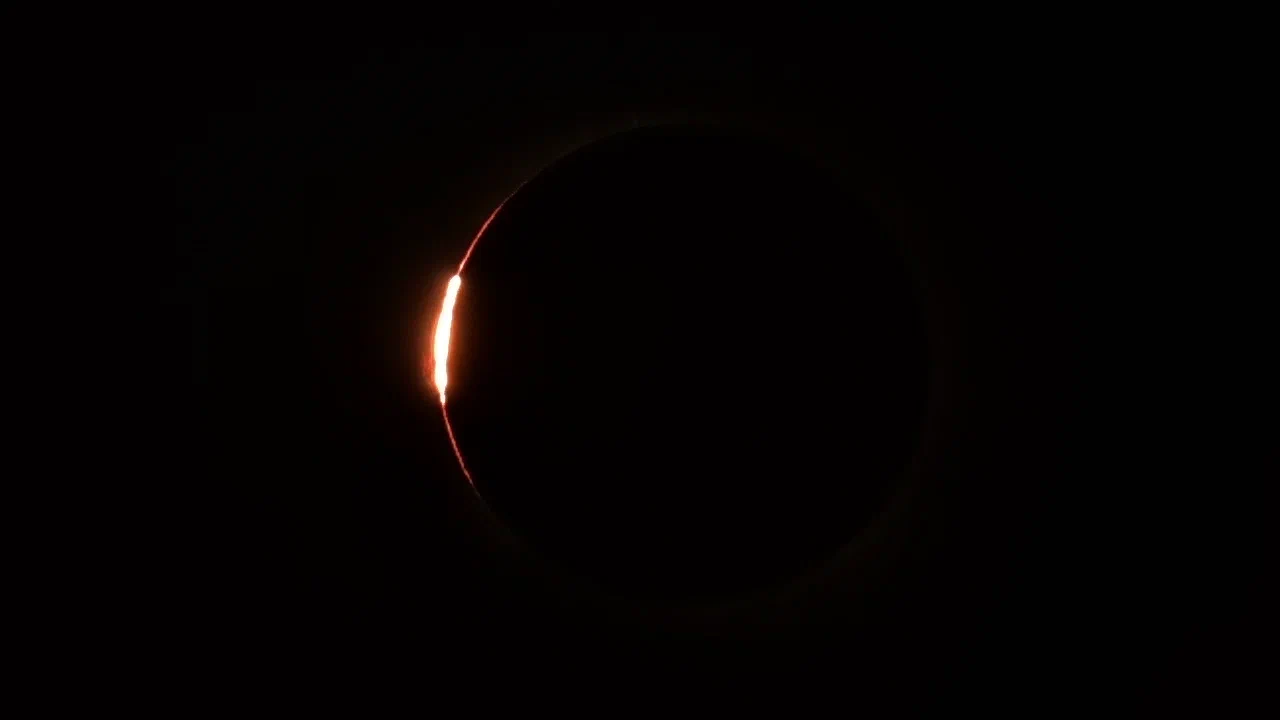
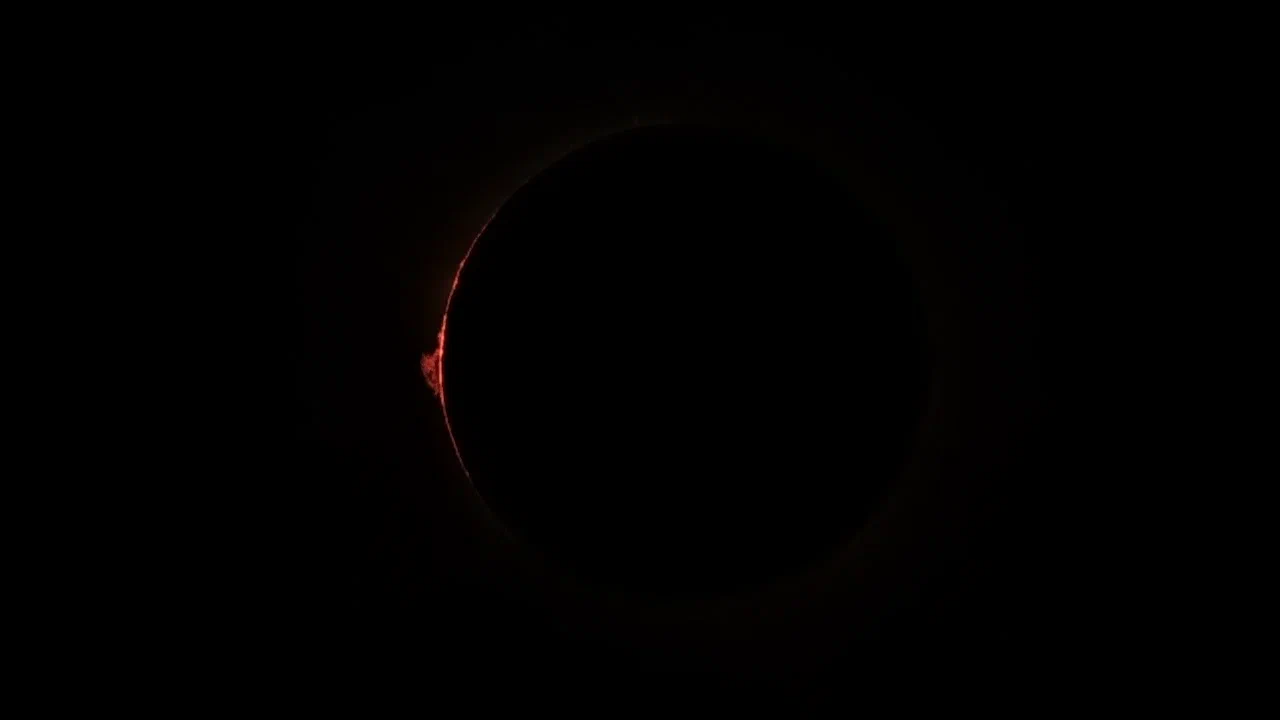
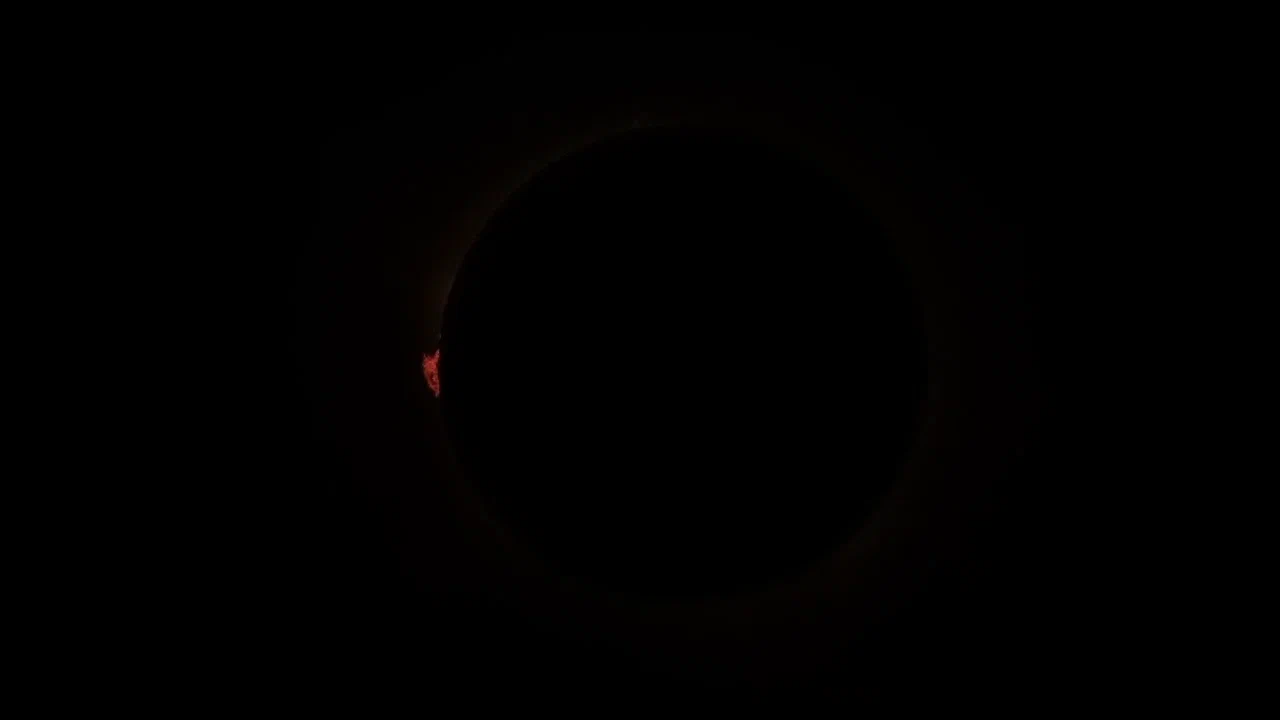
Solar viewTotality! The Sun's bright surface is completely hidden. You can see bright pink-red prominences on the left edge, a thin arc of chromosphere below them, and a soft glow around the black disc: the inner corona, the Sun's outer atmosphere at over a million degrees, normally drowned out by daylight. Only during totality is it safe to look without eye protection. Deepest darkness
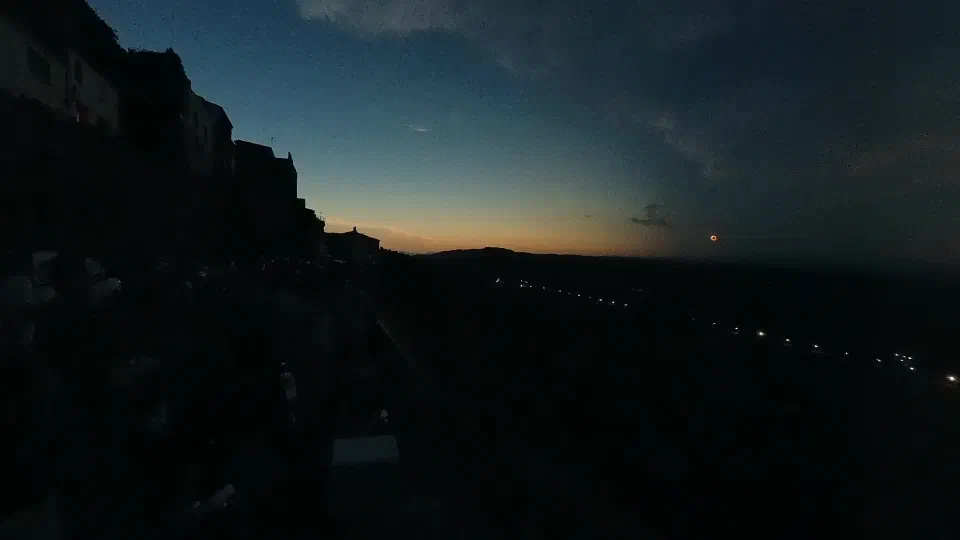
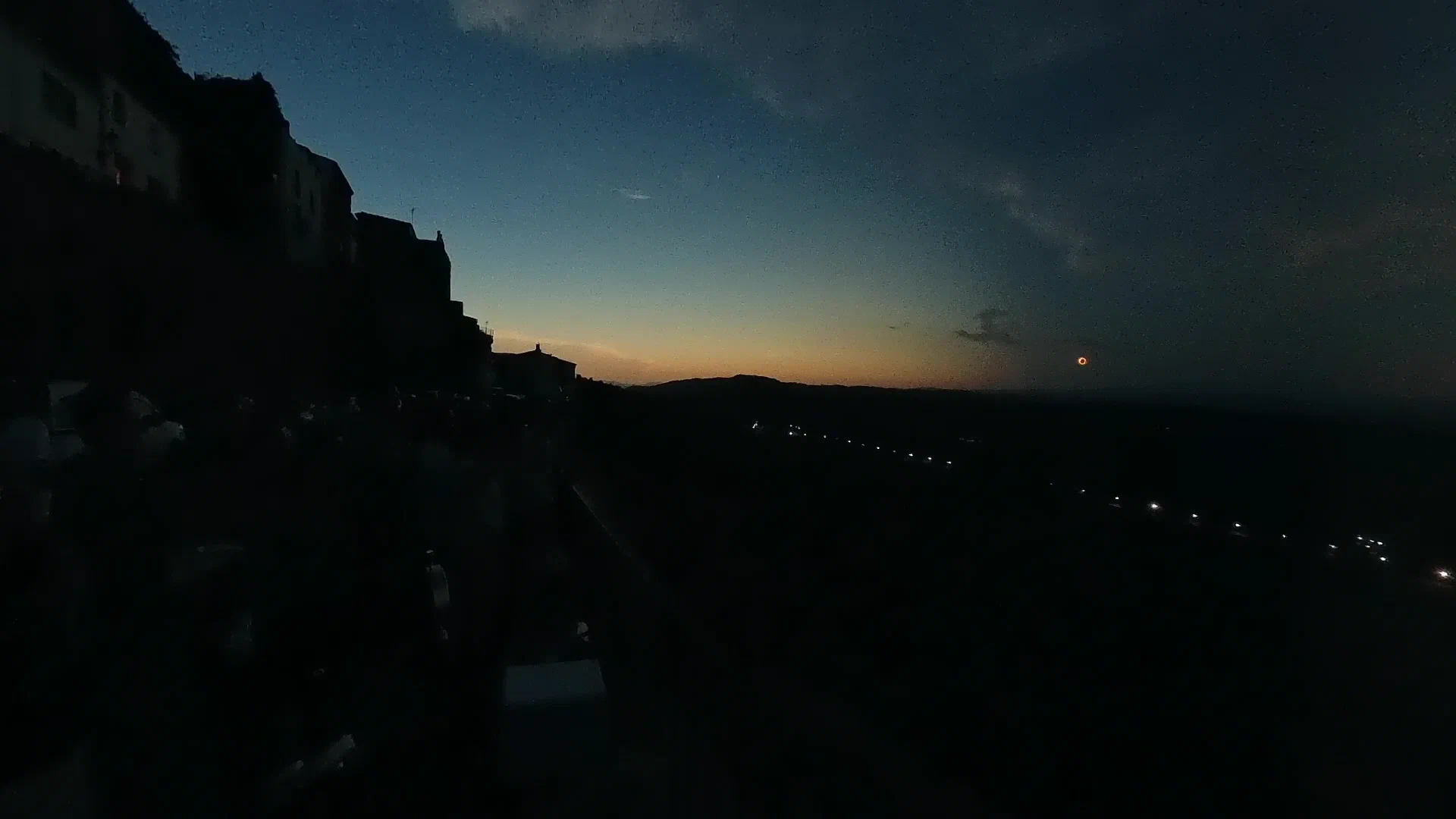
Environmental viewThe deepest darkness in the wide view. The grainy texture is the camera boosting its sensitivity (ISO) to cope with the low light, which shows how dark it has become. 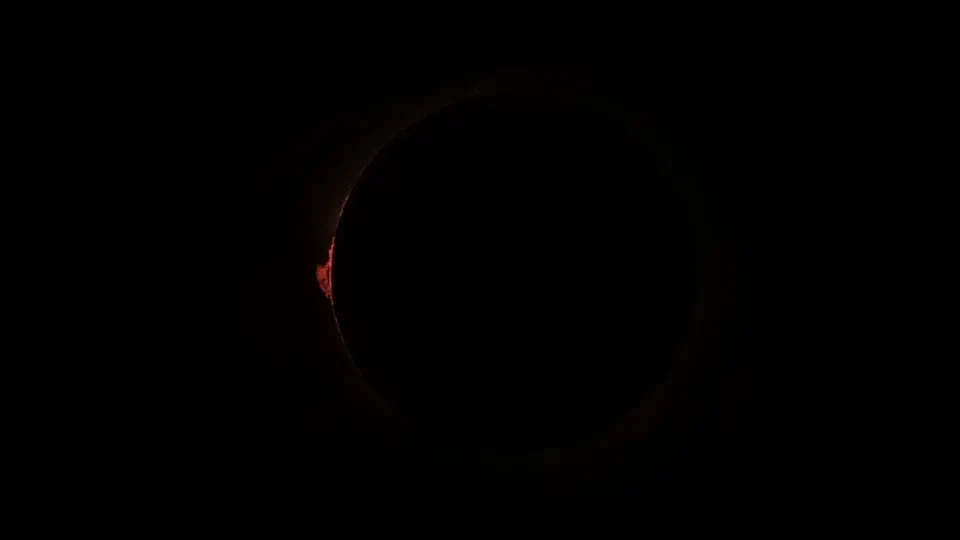
Solar view The corona
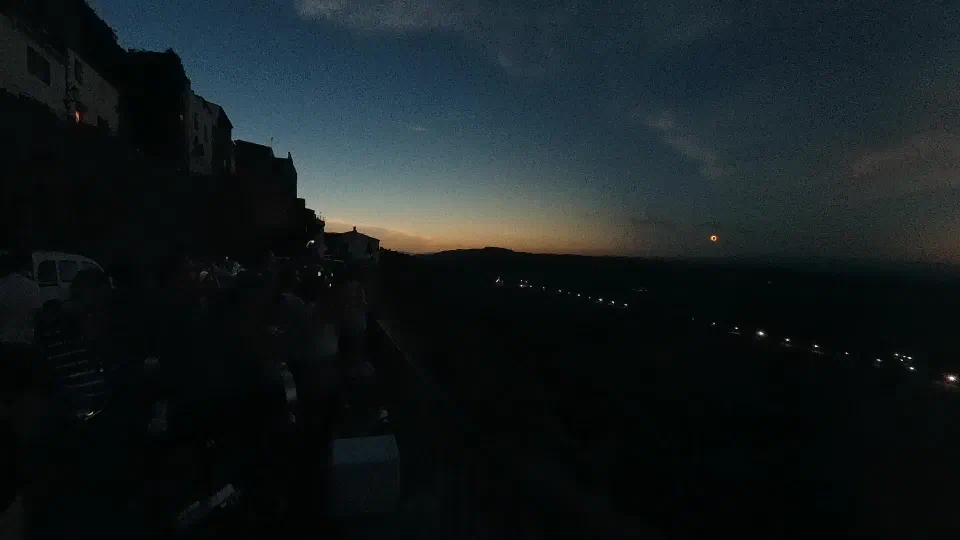
Environmental viewLights are on in the windows of the village houses on the left, and phone screens glow in the crowd as people photograph the eclipse. 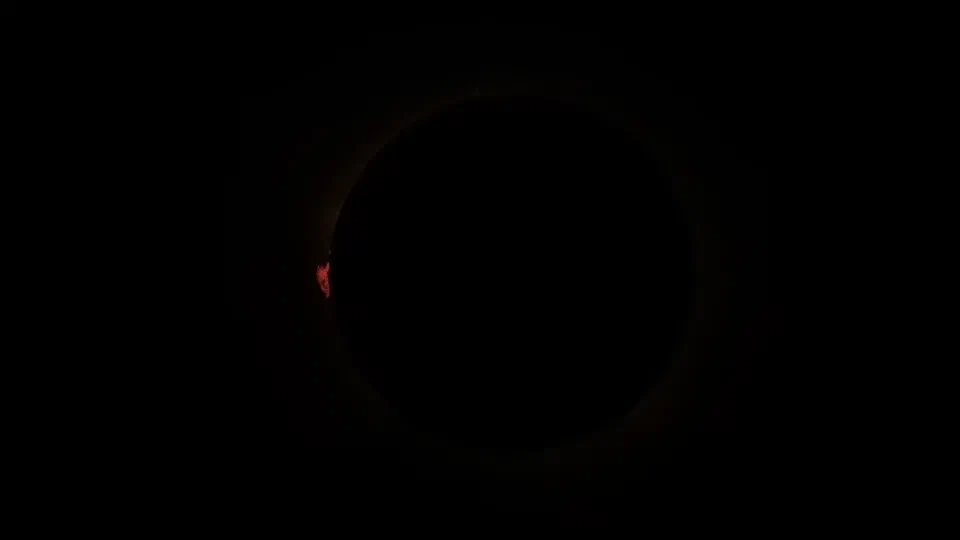
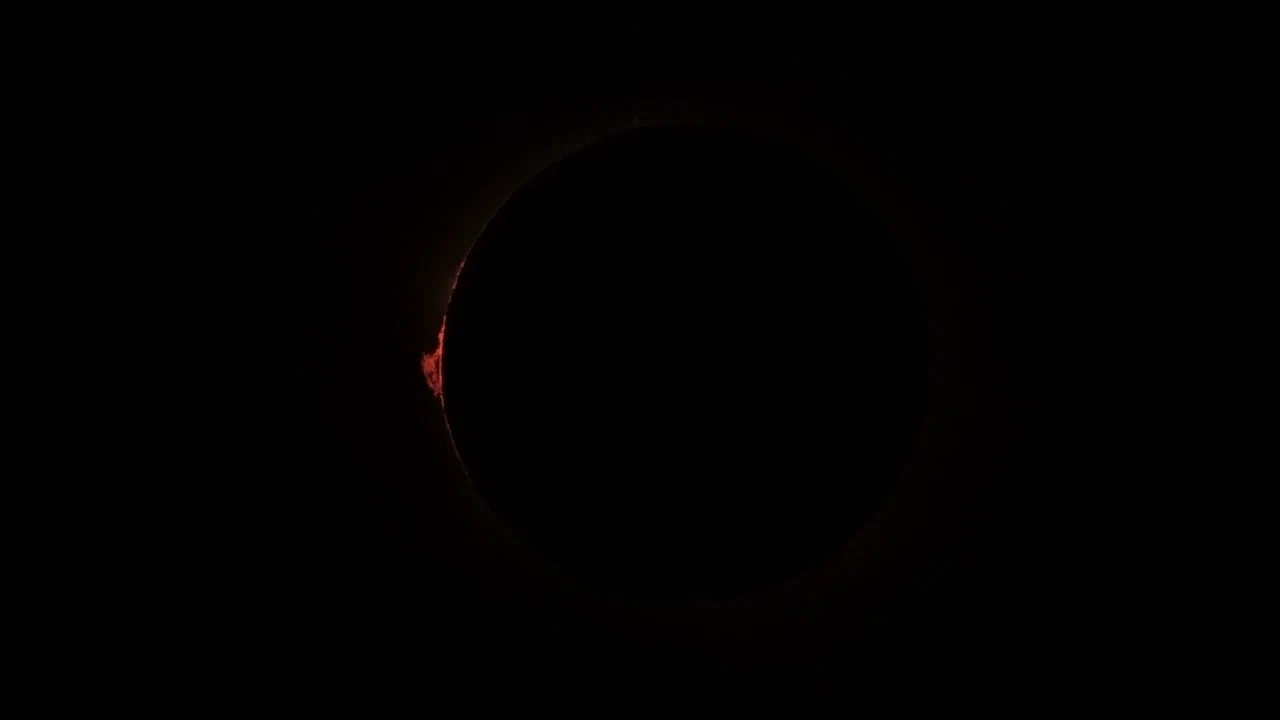
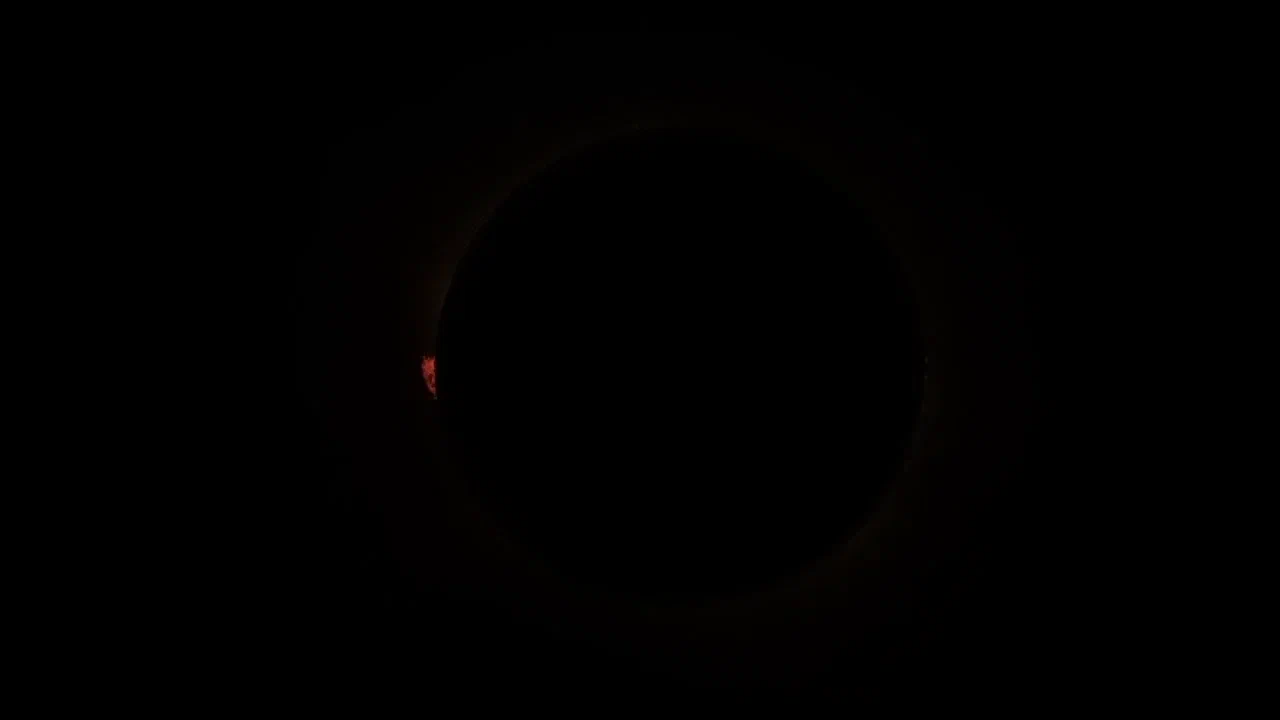
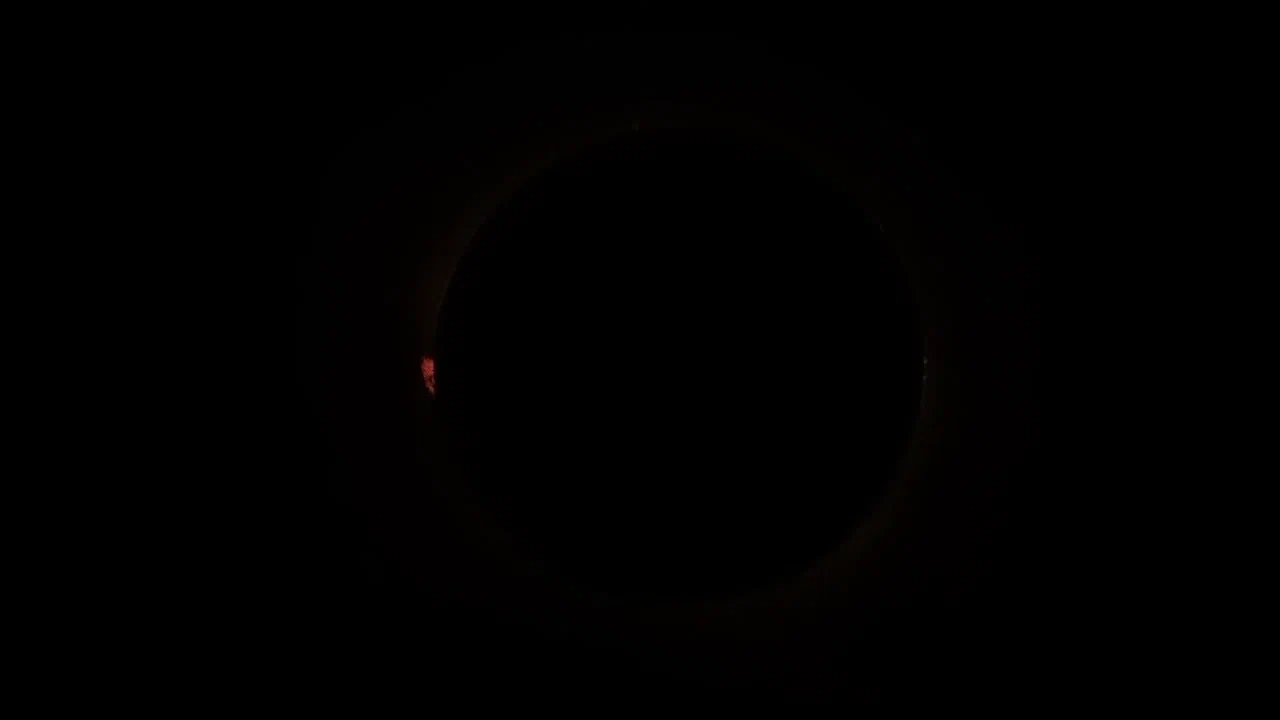
Solar viewThe large prominence on the left holds steady. The corona looks faint in this video because the exposure is set for the bright prominences. To the naked eye it appears as a large, pearly-white crown around the black Moon. - Key moment
Mid-totality
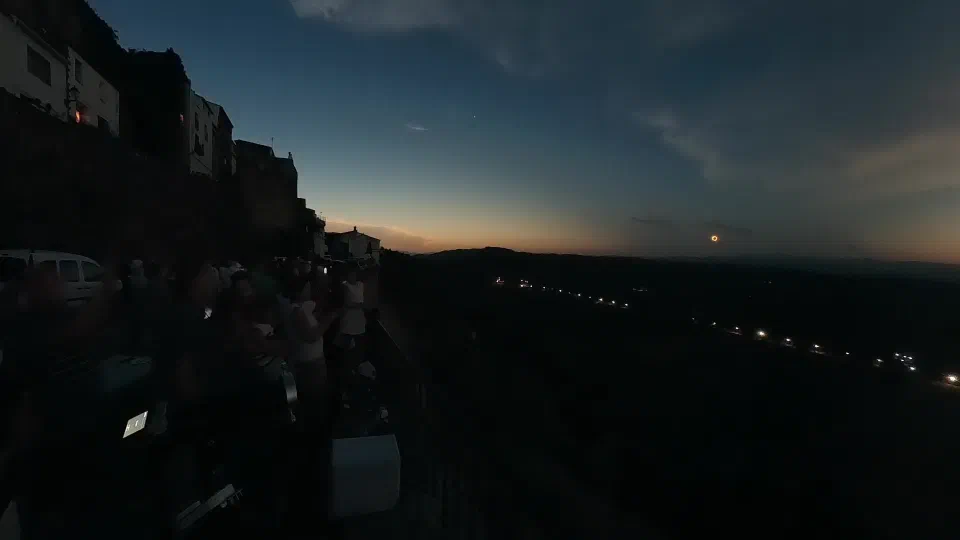
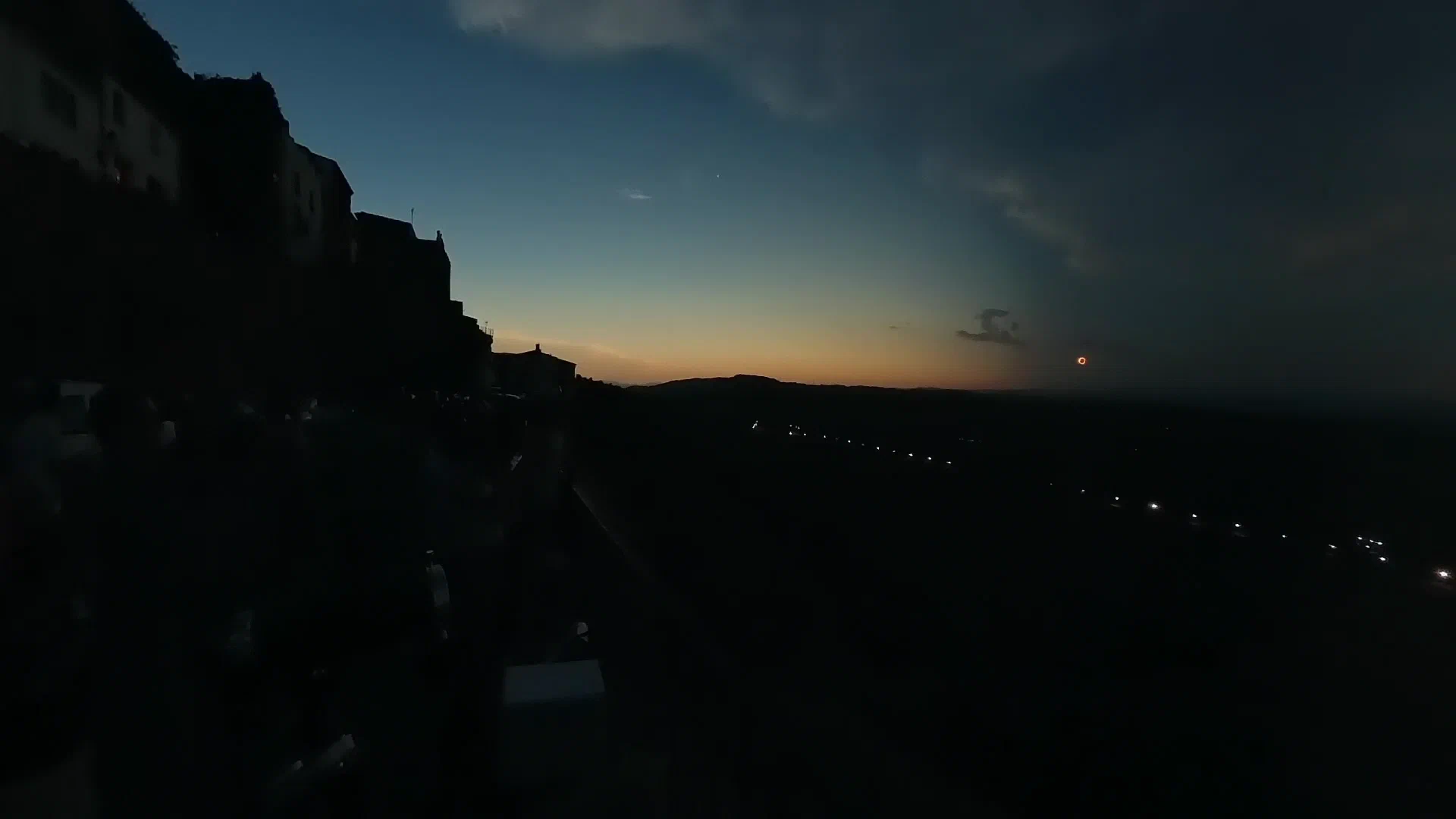
Environmental viewTotality continues: a twilight sky, a glowing horizon and the street lights on. 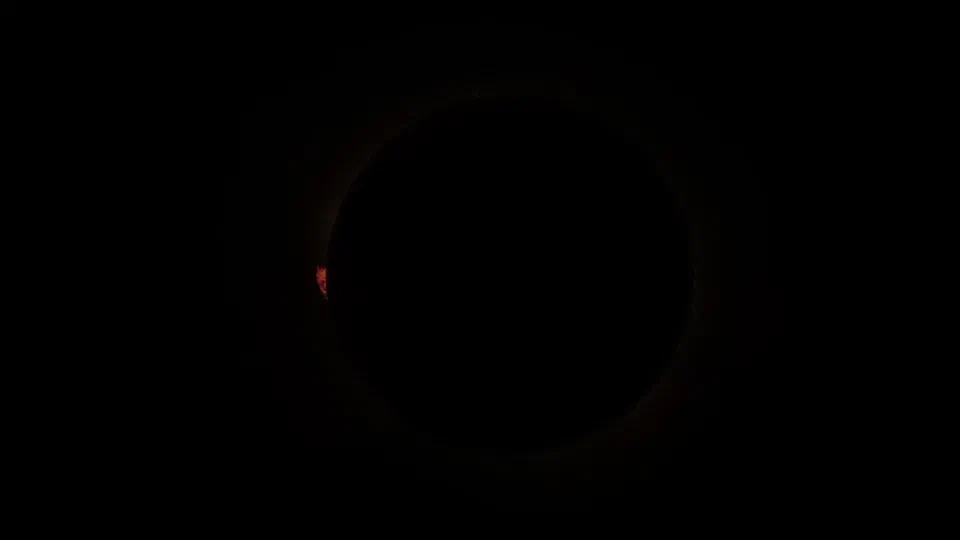
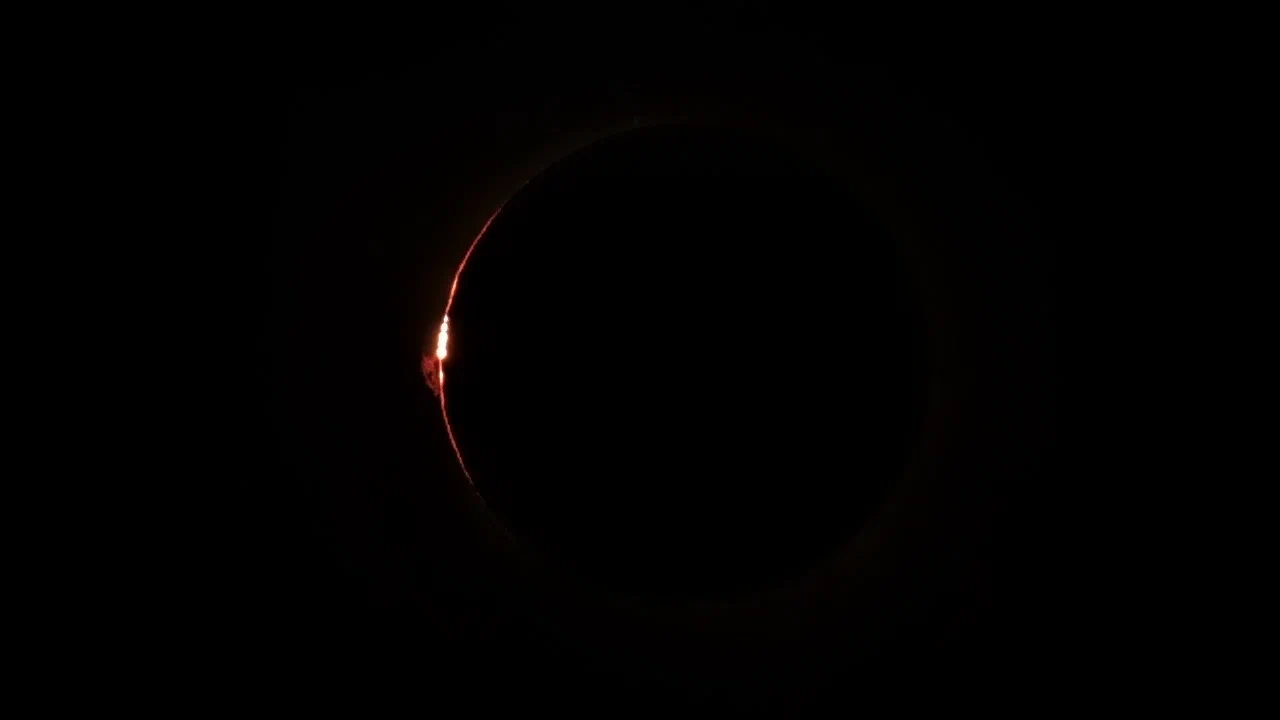
Solar viewAbout halfway through totality, which lasts roughly 1 min 35 s on this recording. The Moon keeps moving: watch the prominence on the left slowly shrink as the Moon's edge covers it. - Key moment
A planet appears: Venus
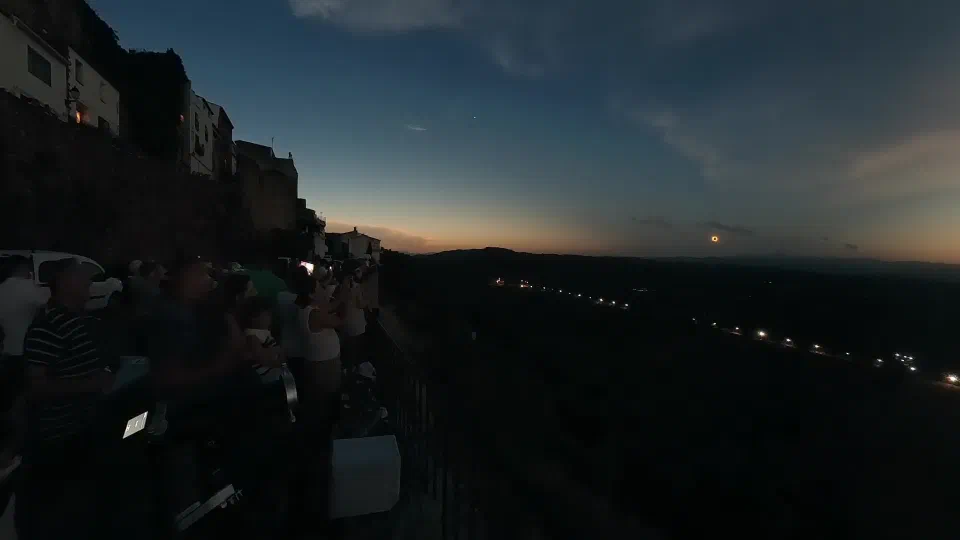
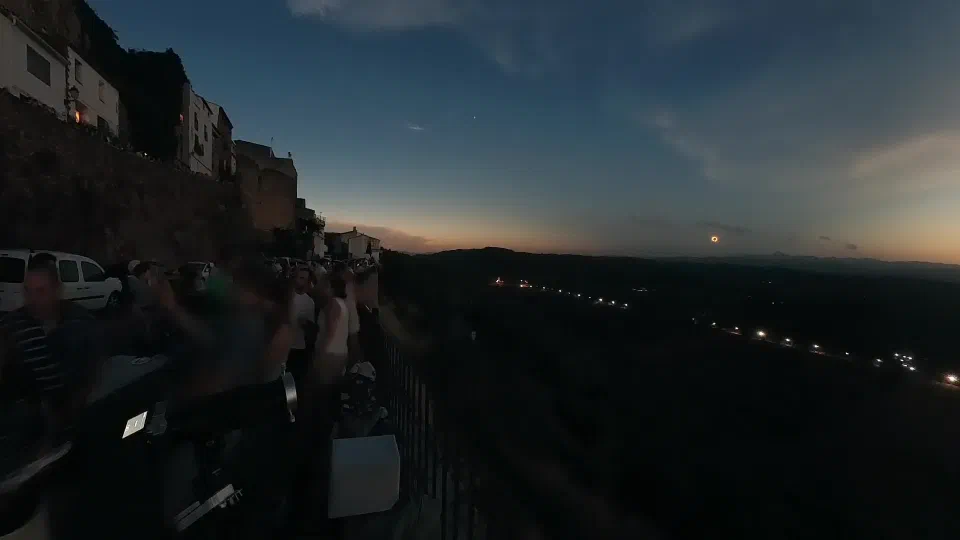
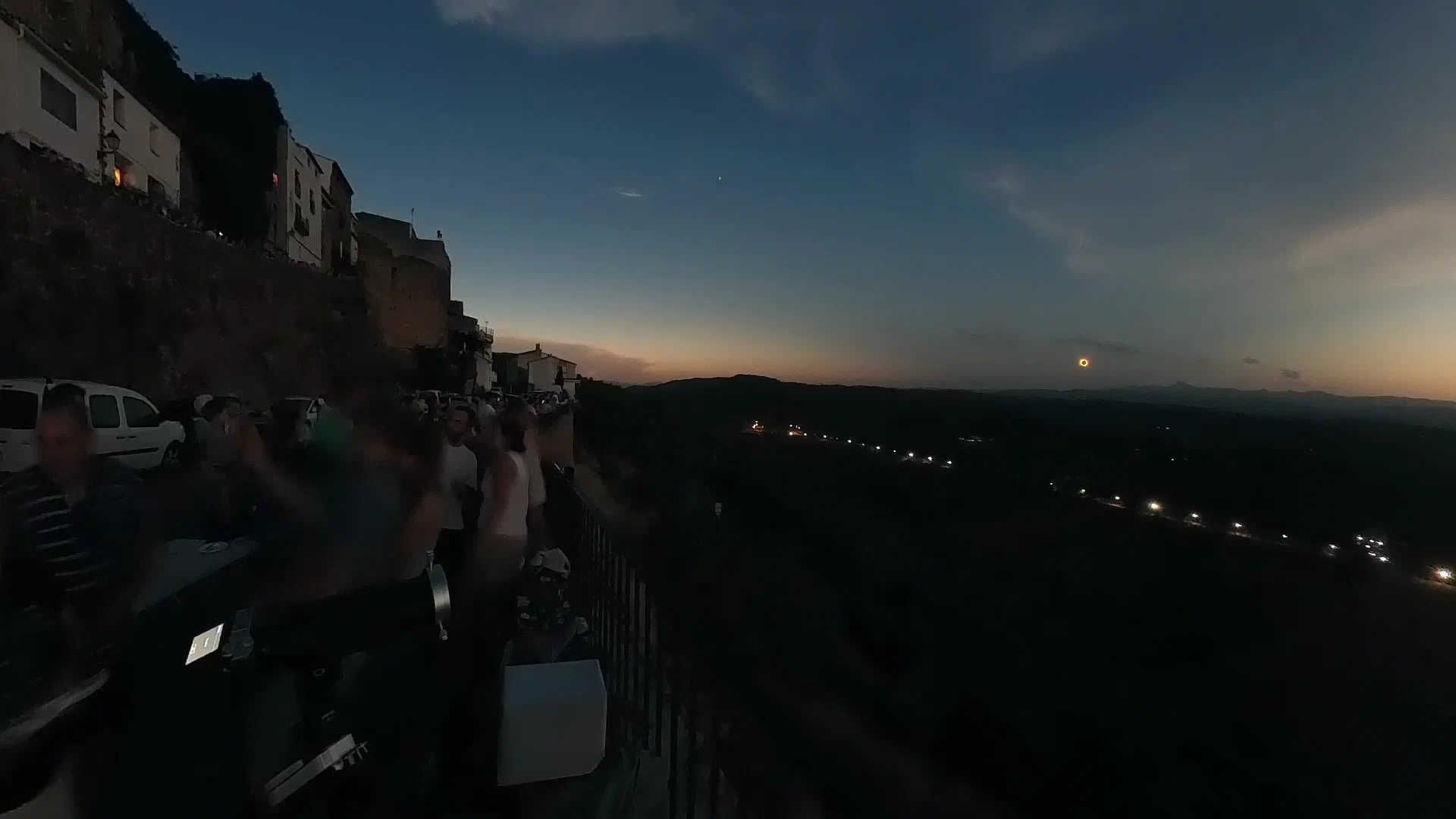
Environmental viewA bright point shows in the darkened sky to the upper left of the Sun. It's most likely the planet Venus, a brilliant 'evening star' in August 2026. Planets and bright stars showing up in broad daylight is one of the classic signs of totality. 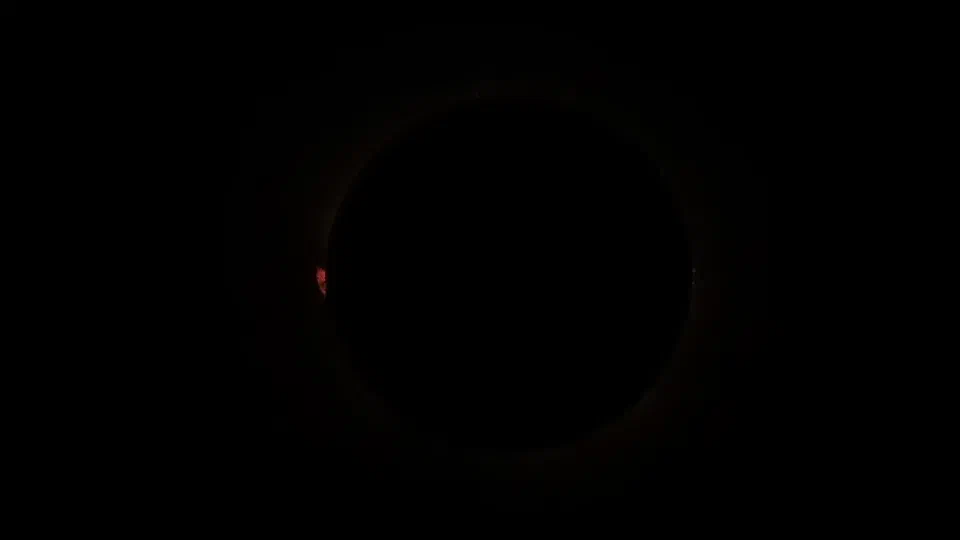
Solar view The Moon uncovers the right side
Environmental view 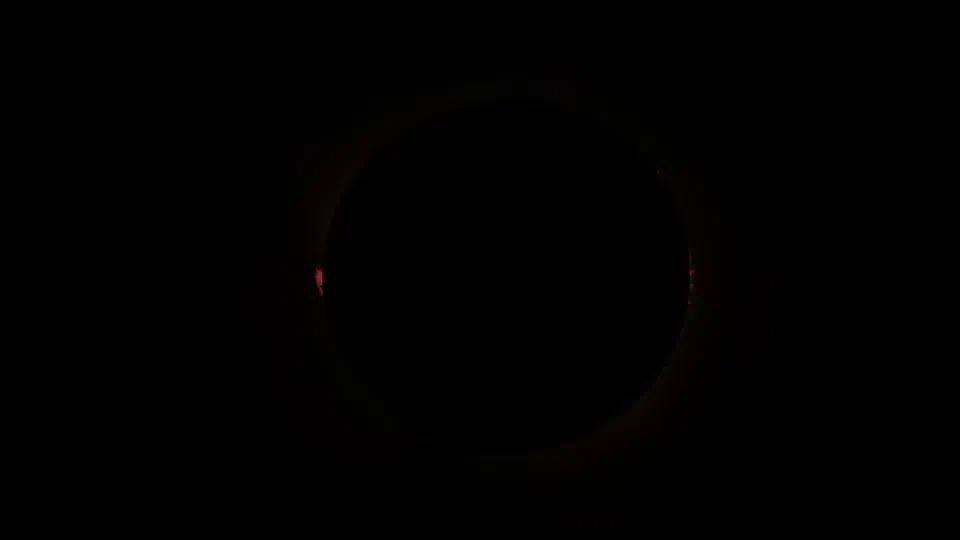
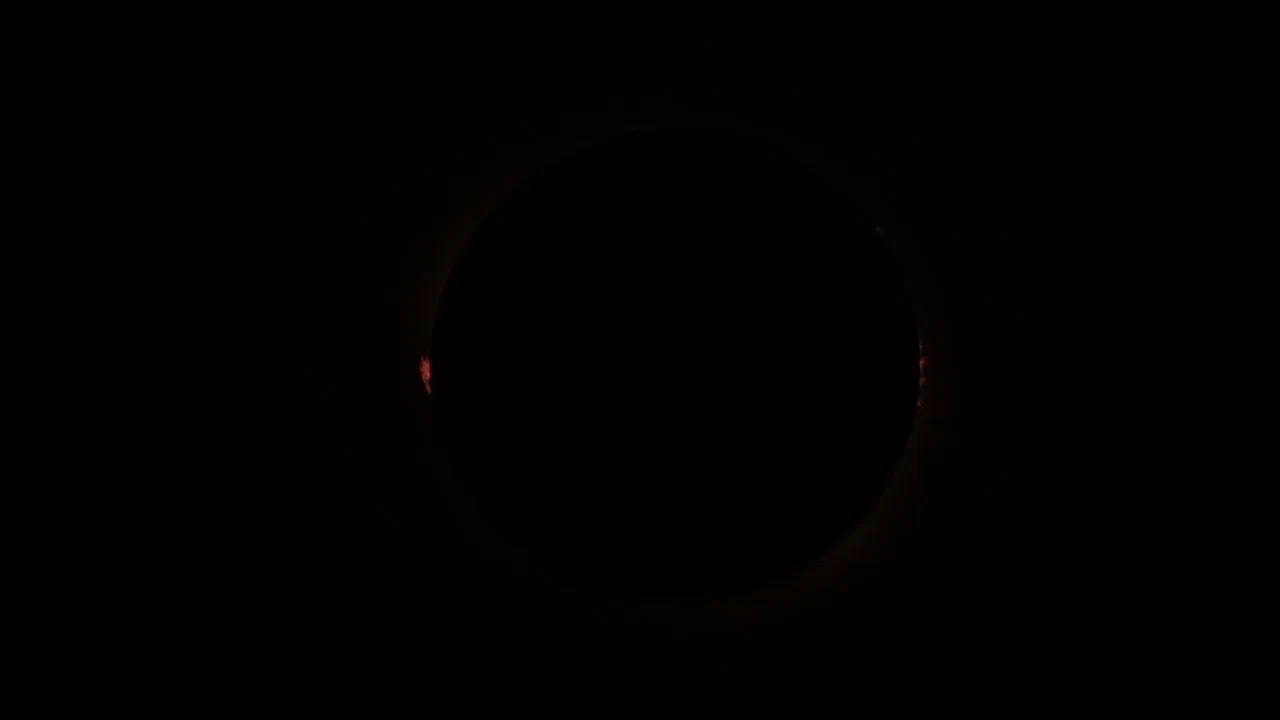
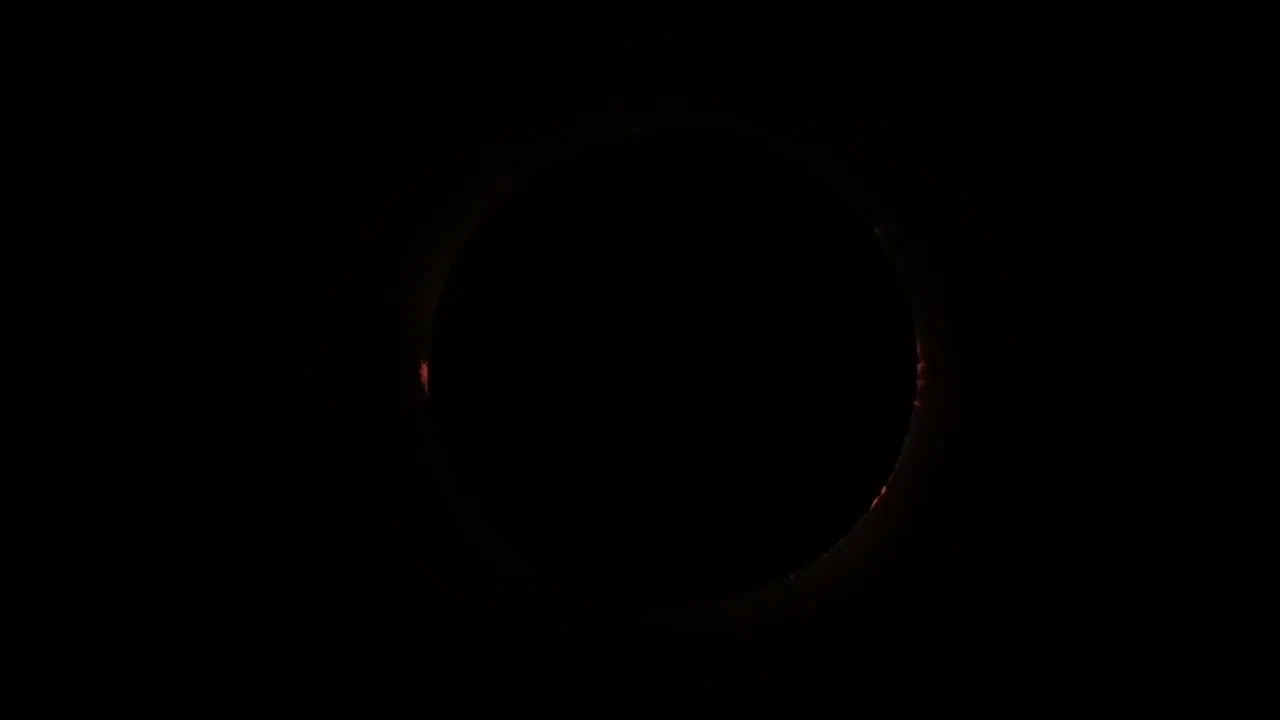
Solar viewThe Moon is now uncovering the right side of the Sun. Small pink points (prominences and chromosphere) start to show on the right edge, while the prominence on the left gradually disappears. Daylight on the horizon
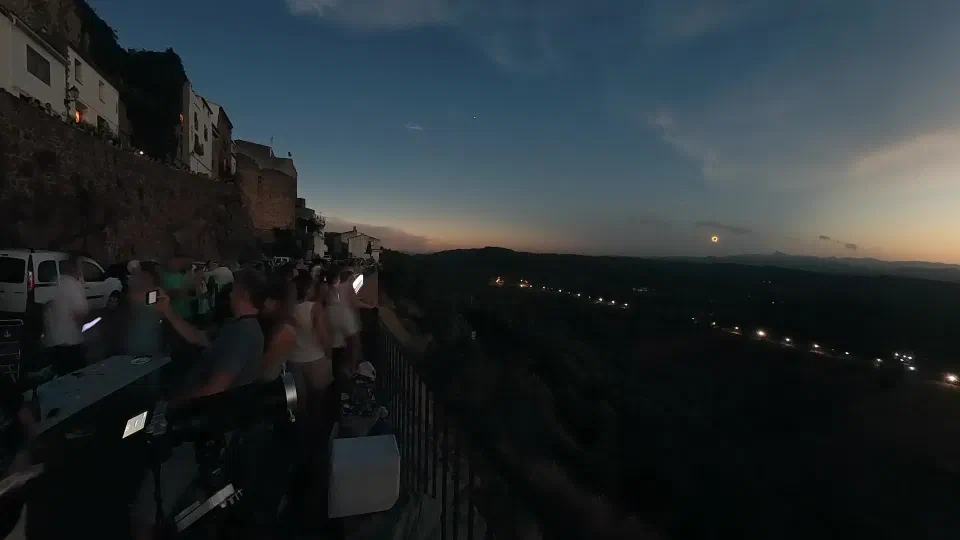
Environmental viewThe sky to the right of the Sun starts to brighten. The far edge of the Moon's shadow is approaching and bringing daylight back. 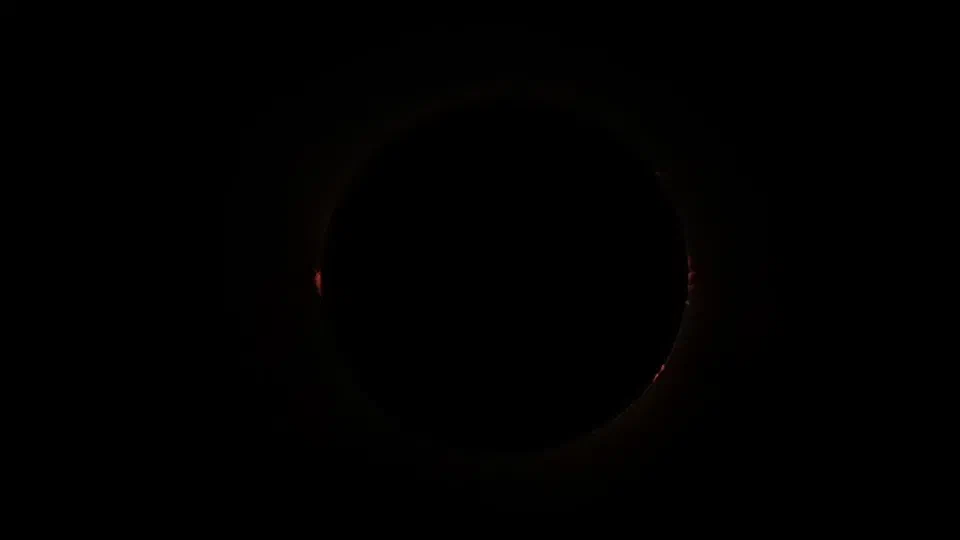
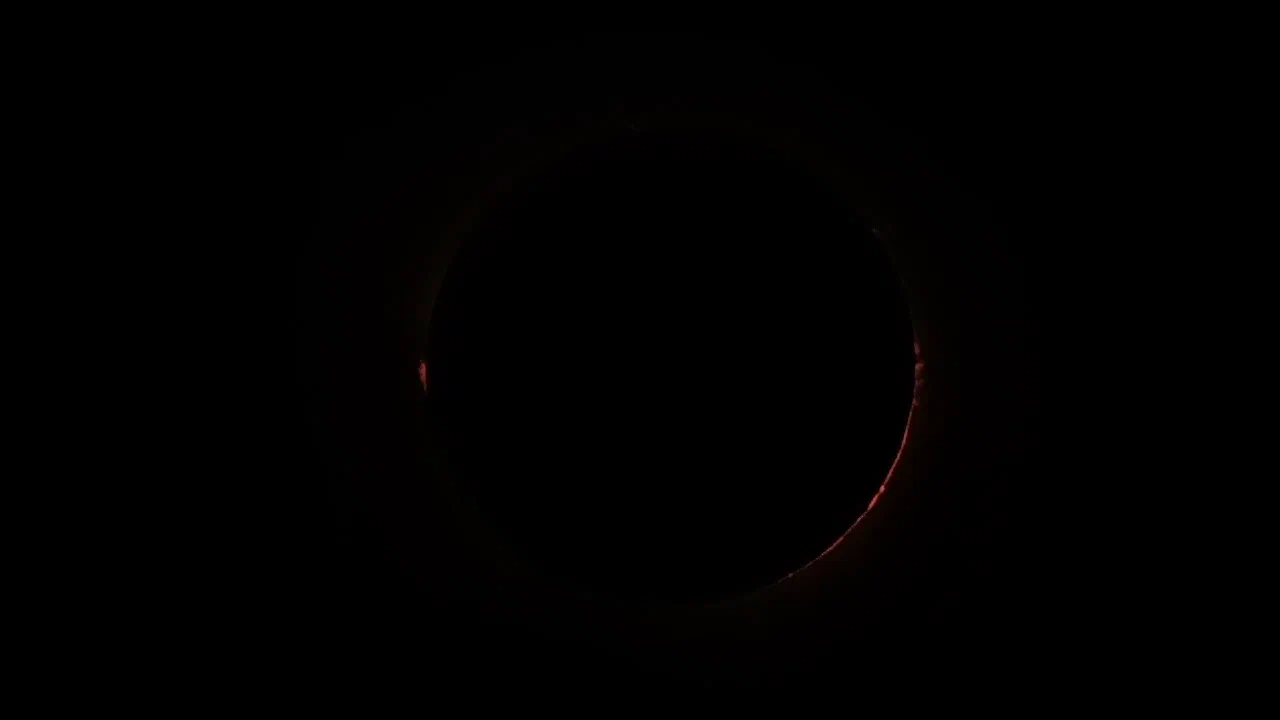
Solar viewA pink arc of chromosphere lights up along the lower-right edge. The Sun's surface is just seconds from reappearing. - Key moment
Totality about to end
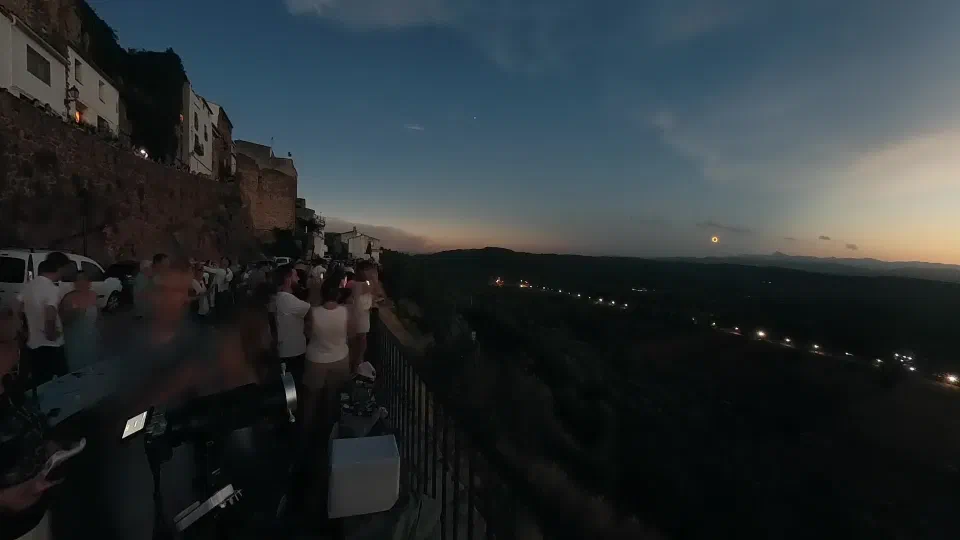
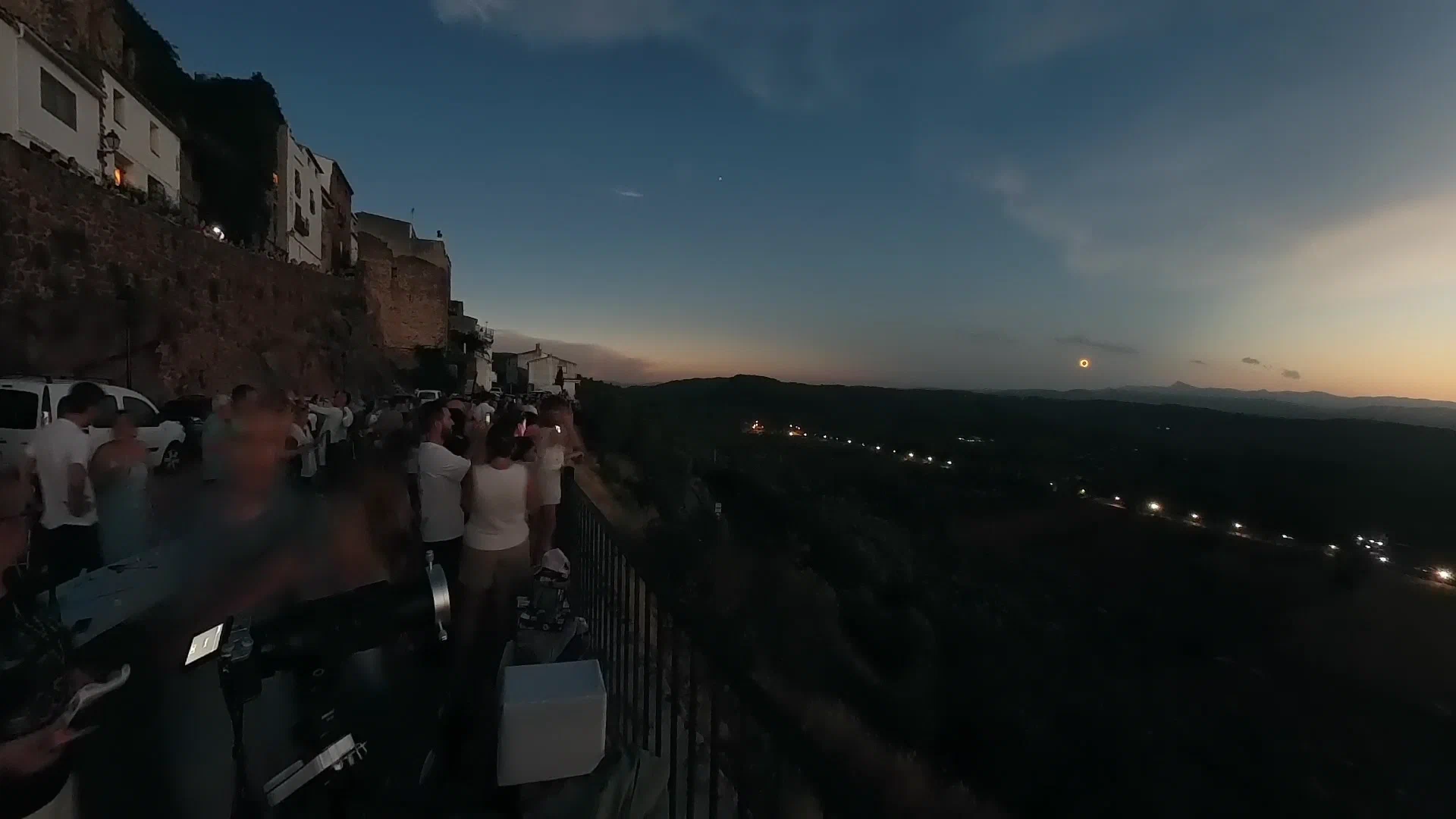
Environmental viewA band of brighter sky spreads on the right as the shadow leaves. 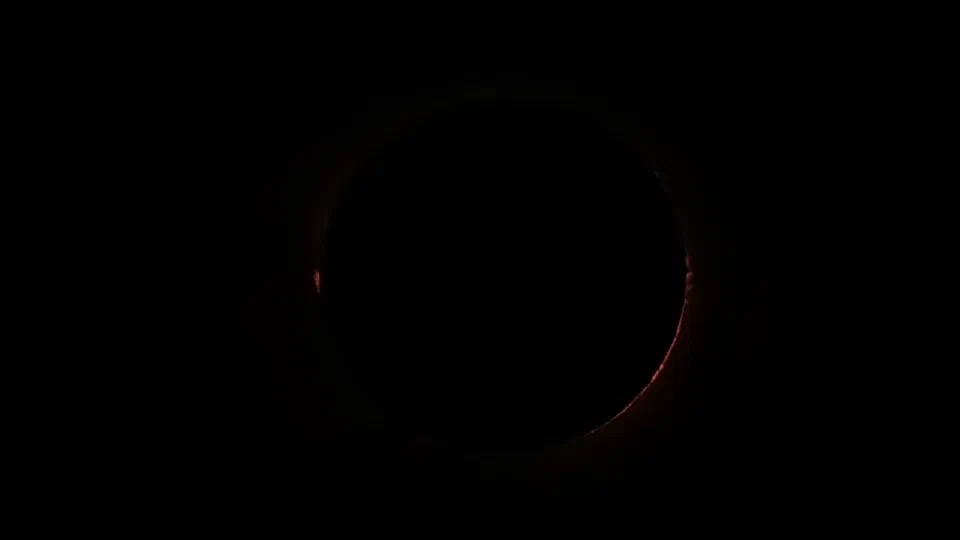
Solar viewThe chromosphere arc on the lower right is bright and wide. These are the last moments of totality, and observers need to get their eclipse glasses ready. - Key moment
Third contact: the diamond ring returns
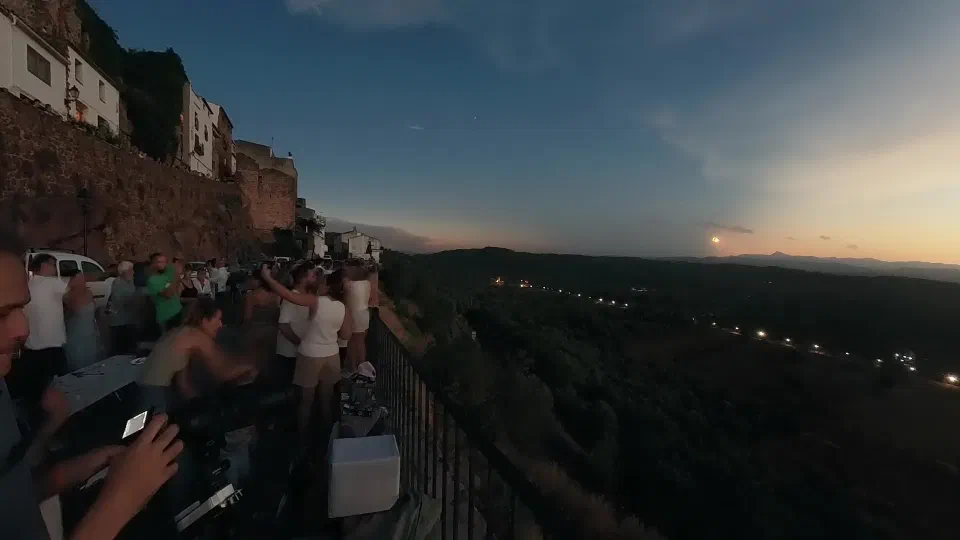
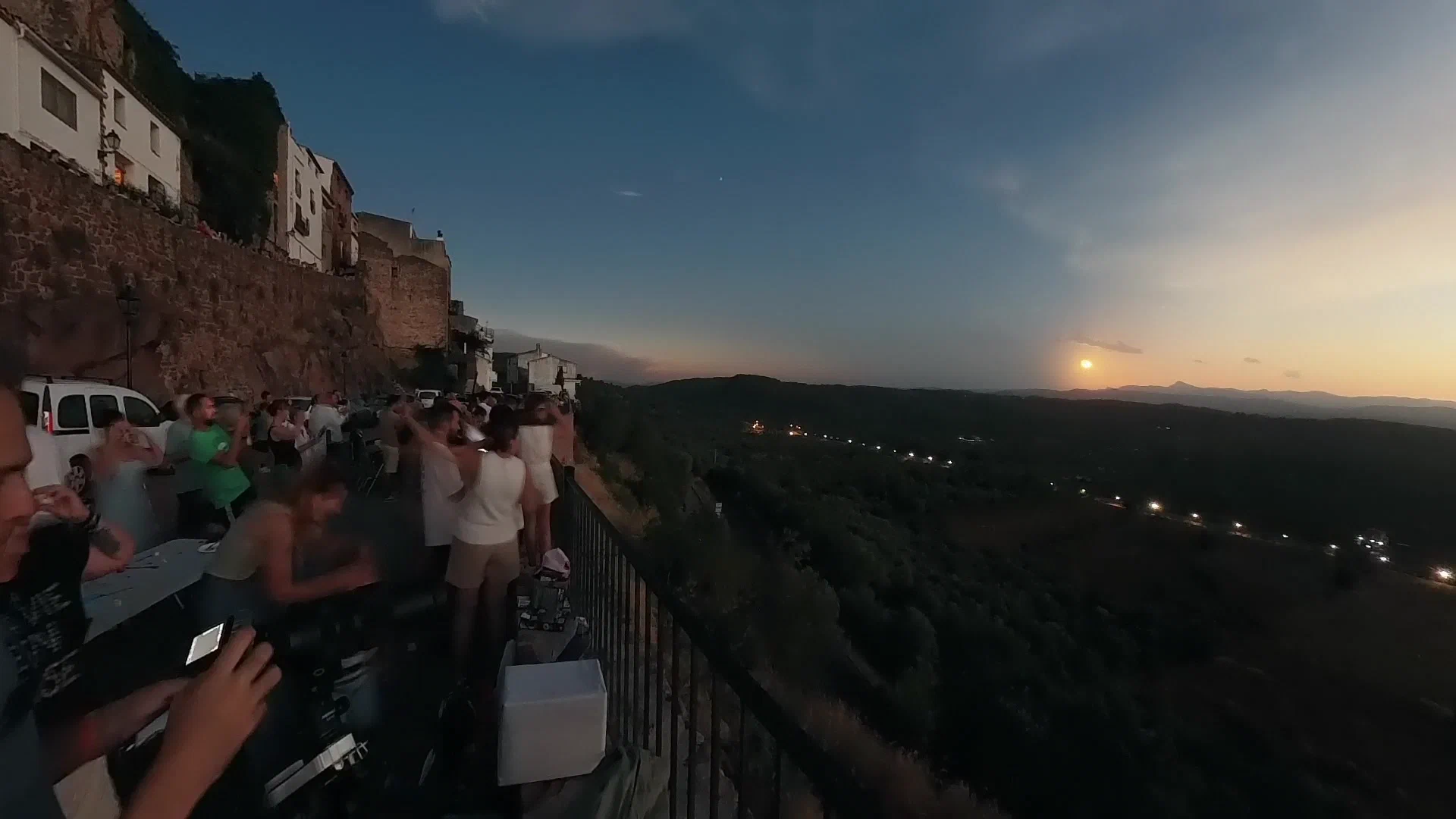
Environmental viewThe Sun reappears as a bright spot on its ring, and the crowd reacts. The blurred figures are people cheering, clapping and moving as totality ends. 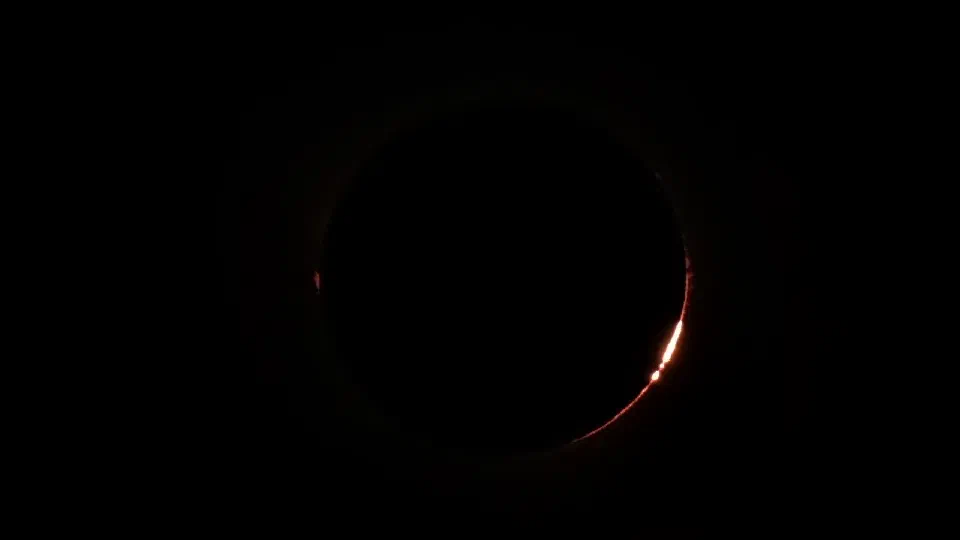
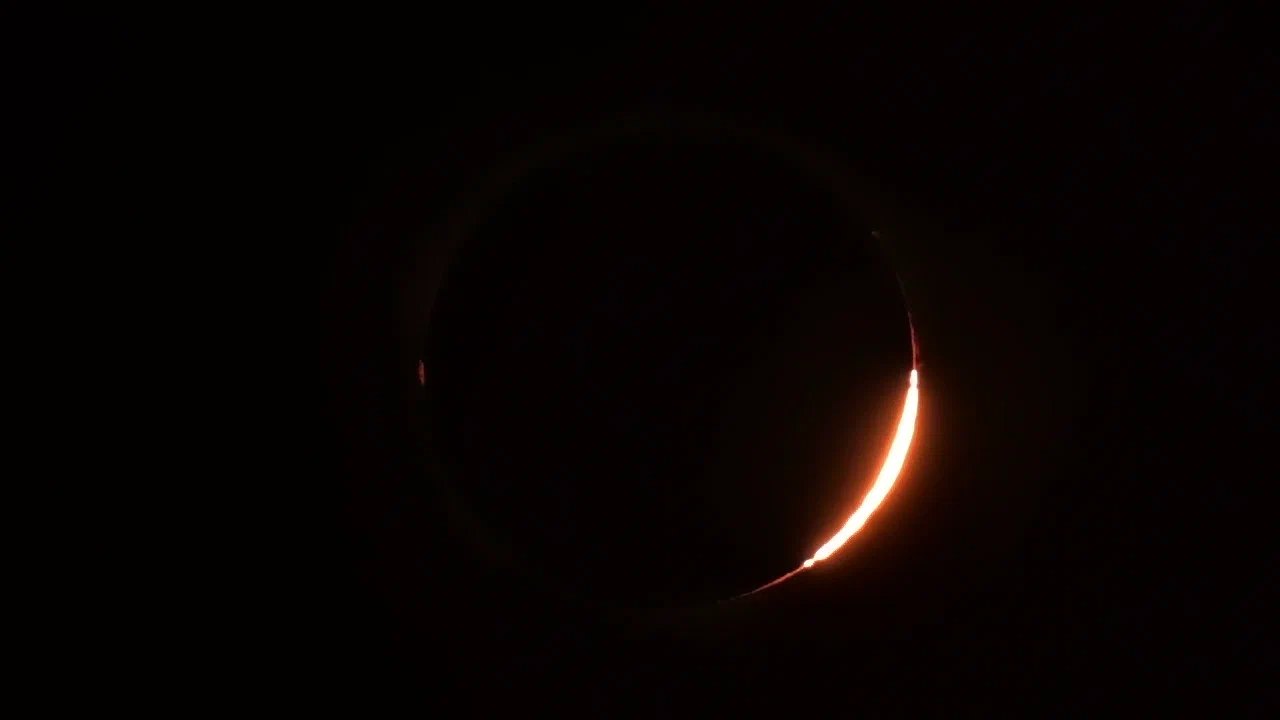
Solar viewThird contact (C3). Sunlight bursts through lunar valleys on the lower right as Baily's beads, which merge into a brilliant point: the second diamond ring. Totality is over and eye protection is needed again. Moments later the ring grows into a thin bright crescent, and its glare drowns out the prominences and the corona. - Key moment
Daylight returns
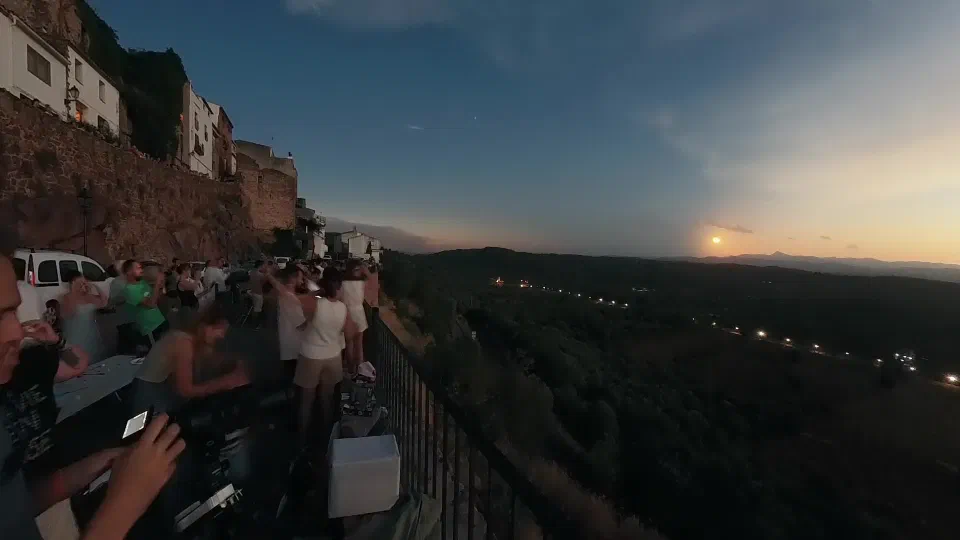
Environmental viewDaylight comes back as more of the Sun is uncovered, and the landscape, crowd and sky brighten quickly. The Moon's shadow has moved on to the east. 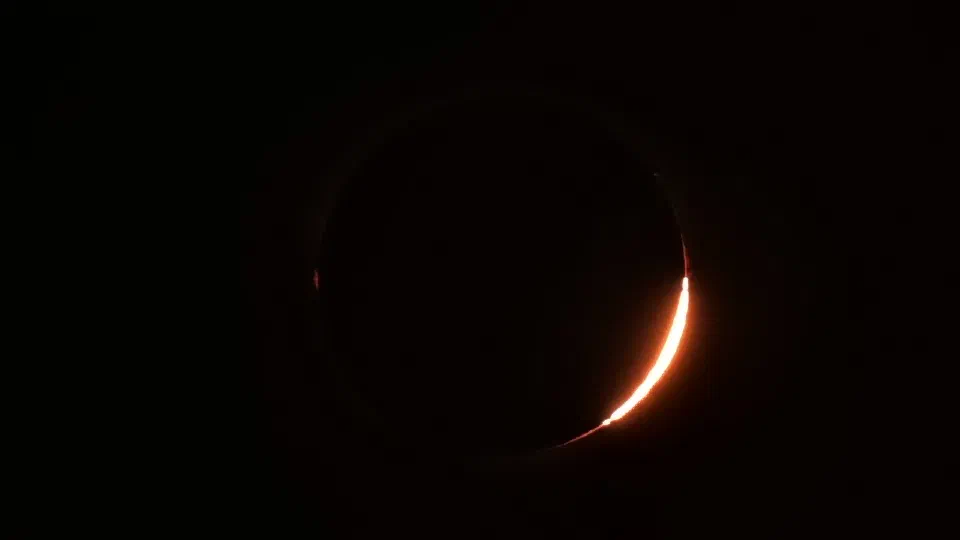
Solar viewThe partial phase has started again. The crescent is now on the right-hand side, a mirror image of what we saw before totality. Last image of the sequence
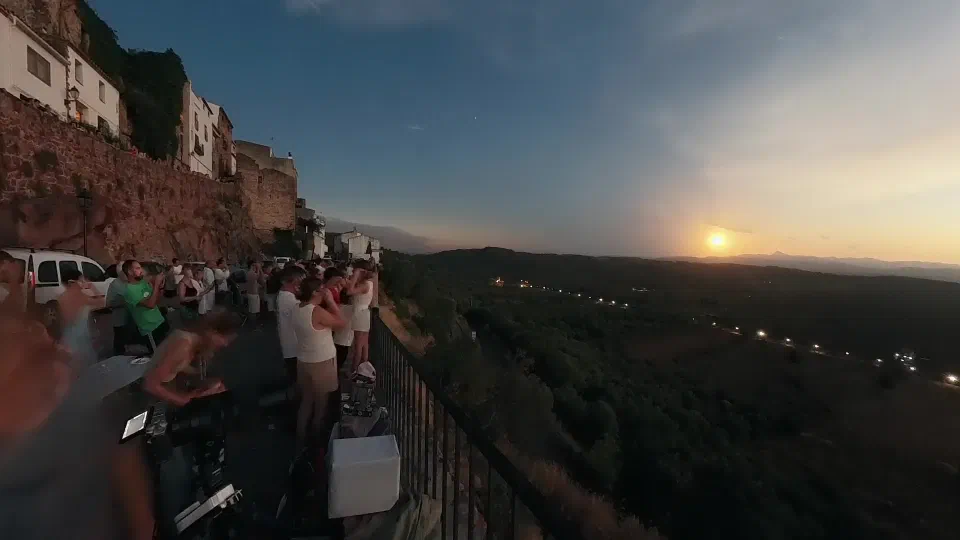
Environmental viewThe Sun is a dazzling point just above the hills again, and the valley street lights are still on. 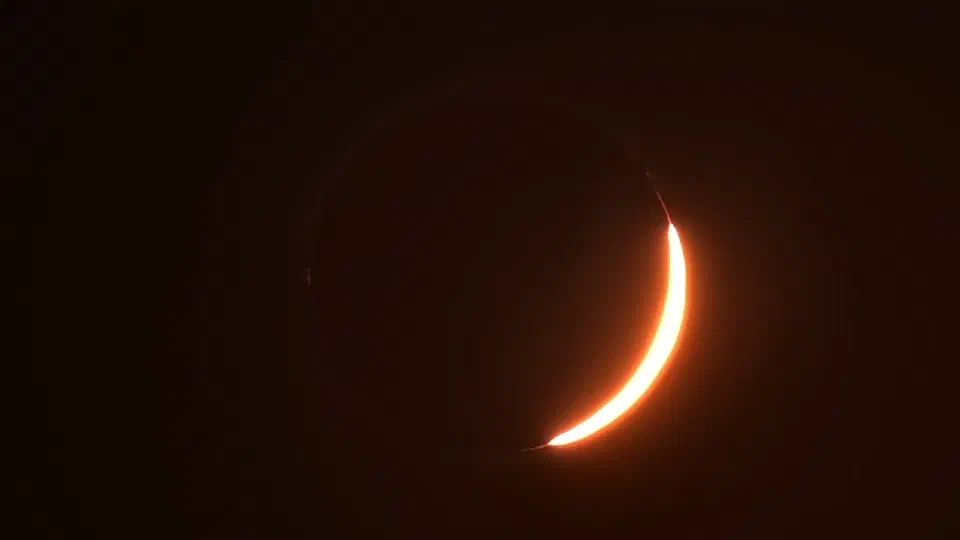
Solar viewThe Moon keeps sliding off the Sun, and the Sun set soon afterwards while still partially eclipsed.
Glossary
- Partial eclipse
- The Moon covers only part of the Sun. Looking at it without certified eclipse glasses is never safe.
- First / second / third / fourth contact (C1–C4)
- The four instants of a total eclipse. C1 is when the Moon first touches the Sun, C2 when totality begins, C3 when totality ends and C4 when the Moon leaves the Sun.
- Sunspots
- Dark, cooler patches on the Sun's surface caused by strong magnetic fields. Many are as big as Earth.
- Photosphere
- The Sun's visible, dazzling 'surface', at about 5,500 °C.
- Limb darkening
- The edge of the Sun's disc looks darker than the centre, because there we see cooler, higher layers.
- Rayleigh scattering
- Air scatters blue light more than red. When the Sun is low its light crosses more air, so it looks orange or red.
- Umbra
- The Moon's full, dark shadow. Only inside it is the eclipse total. Here it sweeps across the land at thousands of km/h.
- Penumbra
- The Moon's partial shadow. Inside it you see a partial eclipse.
- Baily's beads
- Beads of sunlight shining through valleys along the Moon's mountainous edge just before and after totality.
- Diamond ring
- The last (or first) bead of sunlight next to the glowing ring of the corona. It looks like a diamond ring.
- Chromosphere
- A thin layer of the Sun's atmosphere just above the surface. It glows pink-red (hydrogen H-alpha light) and is visible for a few seconds at C2 and C3.
- Solar prominence
- A huge cloud of hot, glowing gas held above the Sun by magnetic fields, often several times larger than Earth.
- Corona
- The Sun's outer atmosphere, over a million degrees. It's only visible to the eye during totality, as a pearly-white crown.
- 360° sunset
- During totality the sky overhead is dark, but the horizon all around glows orange. That light comes from outside the Moon's shadow.
- Eye safety (ISO 12312-2)
- Certified eclipse glasses block more than 99.99% of sunlight. Take them off only once the Sun is completely covered, and put them back on the instant sunlight returns (the second diamond ring).