

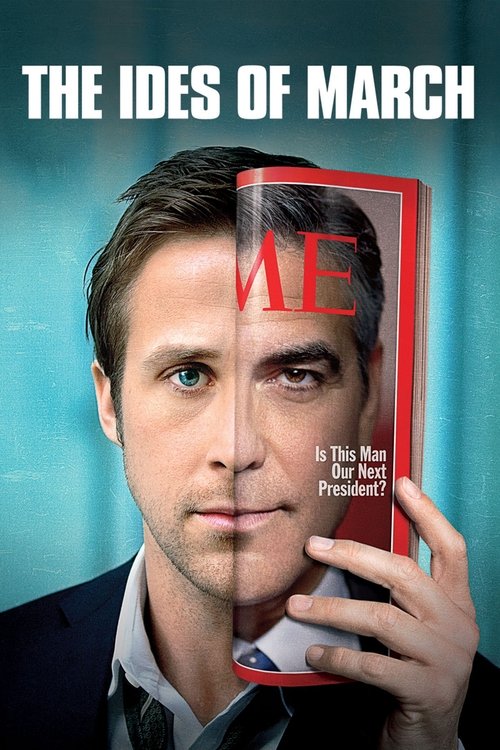
 In a convention centre, Stephen Meyers (Ryan Gosling) is with the technicians doing a sound check. The hall is empty, with only technicians, security teams and the flag of the United States. He reads the first lines of a speech he has written, which soon overlaps with the one being delivered by Governor Mike Morris (George Clooney) to a packed auditorium. So begins a film that dramatically explores the balancing act between the values, ideals and principles of characters pursuing their ambitions in a political campaign.
What have we got?
- An intelligent script (based on a play by Beau Willimon) with masterly direction by George Clooney (as in Good Night, and Good Luck).
- Characters perfectly played by Ryan Gosling (also impressive in Drive and the romantic The Notebook), George Clooney (Michael Clayton, Syriana), Paul Giamatti (you’ll know him from The Illusionist), Philip Seymour Hoffman (masterly in Happiness and Magnolia) and Marisa Tomei (notable in Cyrus and phenomenal in The Wrestler). Even the intern, Evan Rachel Wood (from the fabulous Across the Universe), works at a very high level.
- A realistic and interesting film with very elegant, well-executed cinematography and photography.
What haven’t we got?
- A script that’s easy to follow.
- An innovative vision.
How does it turn out?
A pleasure to watch, to begin with. The script and story can be complex, mostly because at first you don’t know what to hold on to. It opens with echoes of the grand The West Wing, introducing the most visible side of politics and the most visible values of the characters. But it isn’t the same: here the central axis is ambition and power, not politics. As it develops it gets further inside the characters, and the drama and the contradictions of each of them emerge. Two events, independent of each other, give rise to suspense and, with it, dilemmas for the characters: ethics and values clash with ambition and power. Loyalty, integrity, dignity and trust are the key words, which we see played out not only in the script but in how each of them takes them to heart. In short, the price they have to pay with their convictions in order to succeed (or not) in politics. It makes you think, it’s very well made and it keeps you hooked. The only thing to criticise is the approach: the two events that trigger the dilemmas are clichés, one of them at least a classic. On the other hand, it doesn’t take blatant ideological positions, which is welcome. Its criticism applies to all politicians and perhaps extends to anyone in a position of power, in or outside the US.
Watch it if you’re interested in the game of politics, in leadership or in films with moral dilemmas. It recalls the curious Primary Colors for the clash of personal values and the classic Network, above all for the cynicism of its characters.
Highly recommended, for before and after elections.